Saturday, August 6, 2022

Maniac Killer – Full Moon Features (Blu-ray)

Theatrical Release Date: France, 1987
Director: Andrea Bianchi
Writers: Georges Friedland, Marius Lesoeur, H.L. Rostaine
Cast: Bo Svenson, Chuck Connors, Robert Ginty, Suzanne Andrews, Stanley Kapoul, Henri Lambert, Olivier Mathot

Release Date: November 9th, 2021
Approximate Running Time: 83 Minutes 34 Seconds
Aspect Ratio: 1.66:1 Widescreen / 1080 Progressive / MPEG-4 AVC
Rating: NR
Sound: Dolby Digital 5.1 English, Dolby Digital Mono English
Subtitles: N/A
Region Coding: Region Free
Retail Price: $21.95

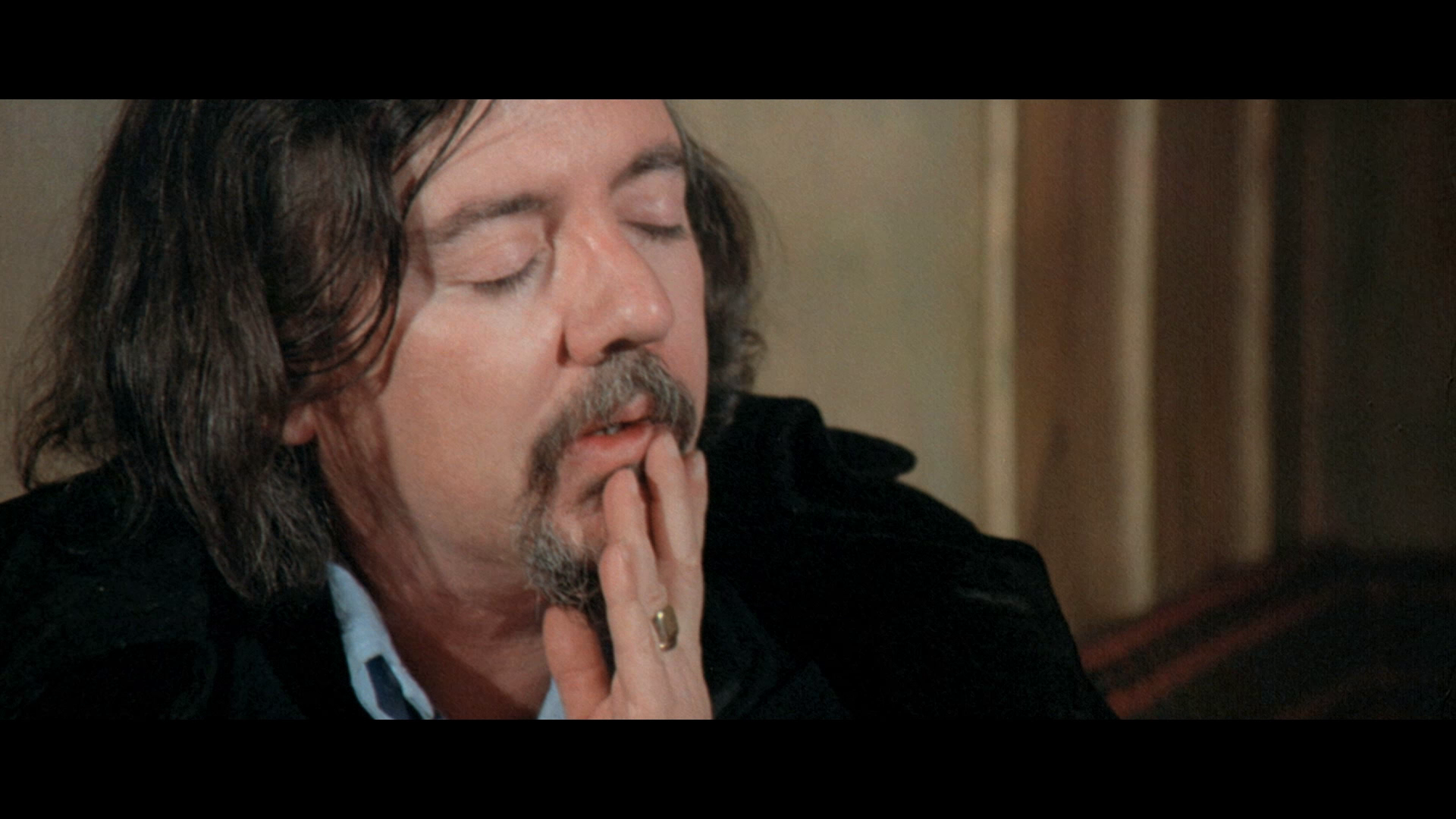
"A malevolent religious cult stalks a French village, kidnapping prostitutes and subjecting them to unimaginable torments under the guise of saving their souls. When a young man's girlfriend is taken by the sect, he teams up with a mob of angry pimps to track down the maniacal, holy rolling killers and put an end to their bloody mission, once and for all." - synopsis provided by the distributor

Video: 2.75/5

Here’s the information provided about this release's transfer, "uncut and remastered from the best available materials found in the Eurocine vaults."

Maniac Killer comes on a 25 GB single layer Blu-ray.

Disc Size: 18.9 GB

Feature: 17.5 GB

The source is in good shape and generally free of any source-related damage. This transfer has many of the same traits that Full Moon’s other transfers have. Colors look correct, the image generally looks crisp, black levels are best described as adequate, there are some moments where blacks look milky, and there are some minor compression related issues.

Audio: 3/5

This release comes with two audio options: a Dolby Digital 5.1 mix in English and a Dolby Digital mono mix in English. There is not much difference between these two audio mixes. The inclusion of a 5.1 mix is actually redundant. Both audio tracks sound clear and balanced, albeit limited in range at times. This release comes with no subtitles.

Extras:

Extras for this release are limited to trailers Barb Wire Dolls, Naked Girl Murdered in the Park, Love Letters of a Portuguese Nun, Sexy Sisters, Voodoo Passion and Women in Cellblock 9.

Summary:

The Maniac Killer was directed by Andrea Bianchi, a filmmaker most known for directing Schlock masterpieces like Strip Nude for Your Killer, Malabimba: The Malicious Whore, and Burial Ground: The Nights of Terror.

What started off as a giallo quickly morphed into something completely different. The narrative revolves around a cult that abducts women for their rituals. There is a subplot that involves a professor who is conducting experiments on animals. Though the police looking for the missing women cannot see which one is an obvious red herring, one would have to be blind not to guess who the red herring is.

The Maniac Killer’s cast is anchored by three American actors: Bo Svenson (The Inglorious Bastards) in the role of a count named Silvano; Chuck Connors (Kill Them All and Come Back Alone) in the role of an eccentric professor named Roger Osborne; and Robert Ginty (The Exterminator) in the role of Gondrand, the leader of the cult abducting women.

From a production standpoint, Maniac Killer is everything you would expect from a Eurocine production: an anemic budget, a few recognizable actors, and a by-the-numbers approach to filmmaking. Though there are no areas where Maniac Killer comes ahead, a few of its biggest flaws include a meandering plot that is void of any murder set pieces; all of the kills are in shootouts; and a score with laser sounds and music cues from other films composed by Luis Bacalov (Django). Ultimately, Maniac Killer fails to live up to the delirious insanity that Andrea Bianchi’s most celebrated films are known for.

Maniac Killer (misspelled on the cover art as Mania Killer) makes its way to Blu-ray via a serviceable release that leaves a lot of room for improvement.


Written by Michael Den Boer

Thursday, August 4, 2022

The Untold Story – Unearthed Films (Blu-ray)

Theatrical Release Date: Hong Kong, 1993
Director: Herman Yau
Writers: Wing-Kin Lau, Kam-Fai Law
Cast: Anthony Chau-Sang Wong, Danny Lee, Emily Kwan, Siu-Ming Lau, Fui-On Shing, Eric Kei, King-Kong Lam, Parkman Wong

Release Date: October 20th, 2020
Approximate Running Time: 95 Minutes 49 Seconds
Aspect Ratio: 1.78:1 Widescreen / 1080 Progressive / MPEG-4 AVC
Rating: NR
Sound: LPCM Mono Cantonese, LPCM Mono Mandarin
Subtitles: English
Region Coding: Region A
Retail Price: $29.95

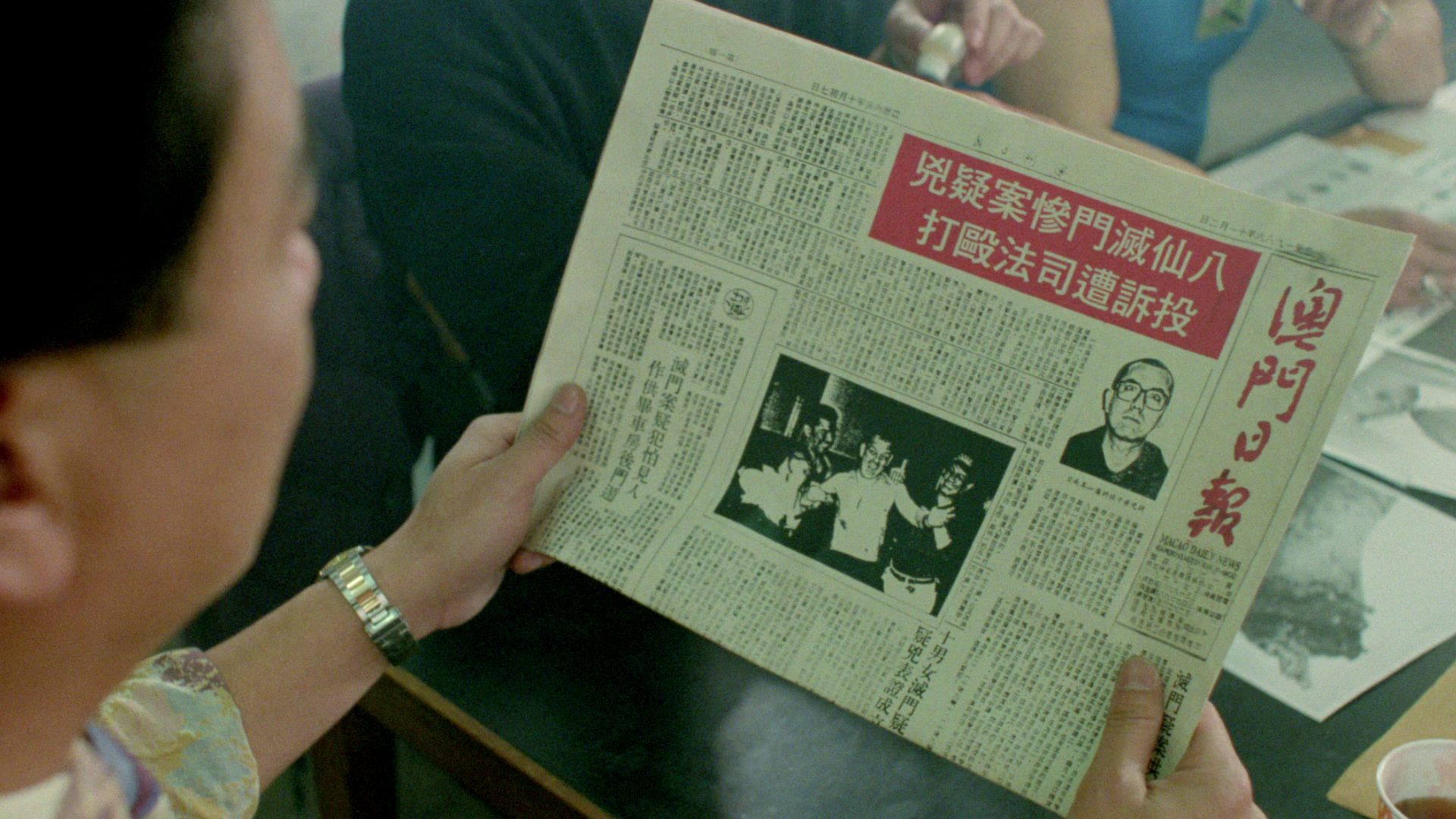
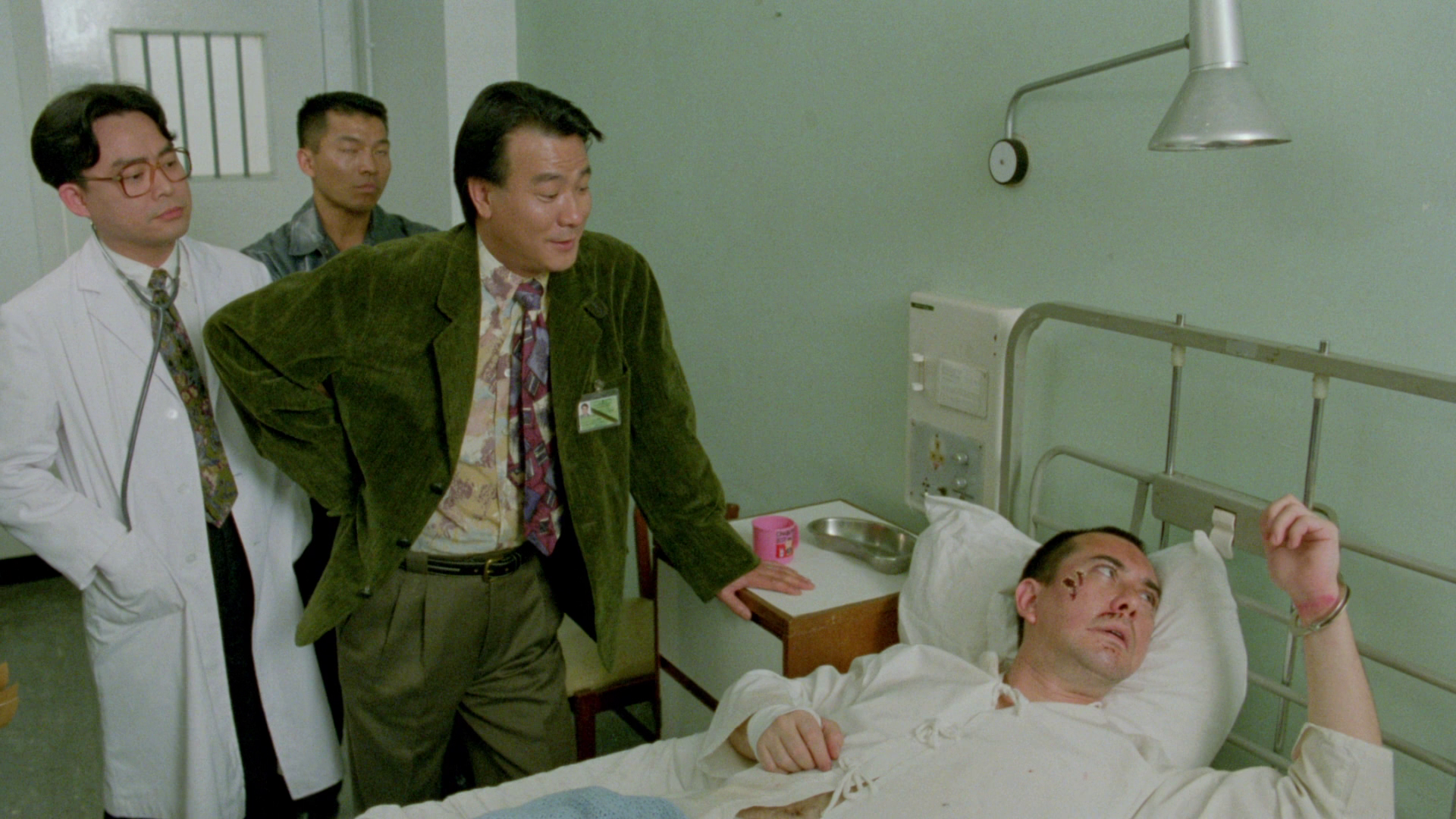
"In 1978 in Hong Kong, a grisly murder takes place. Eight years later, on a Macao beach, kids discover the severed hands of a fresh victim. A squadron of coarse, happy-go-lucky cops investigate, and suspicion falls on Wong Chi Hang, the new owner of Eight Immortals Restaurant, which serves delicious pork bun. The hands belong to the missing mother of the restaurant's former owner; he and his family have disappeared; staff at the restaurant continue to go missing; and, Wong can't produce a signed bill of sale: but there's no evidence. The police arrest Wong and try to torture him into a confession. Can they make him talk? And what was in those pork buns?" - synopsis provided by the distributor

Video: 4.25/5

The Untold Story comes on a 50 GB dual layer Blu-ray.

Disc Size: 43.3 GB

Feature: 25.1 GB

The source used for this transfer is in great shape and the result is a massive upgrade when compared to this film’s previous North American home video releases. Colors are nicely saturated, flesh tones look correct, black levels are good and there appear to be no egregious issues related to digital noise reduction.

Audio: 4.25/5 (LPCM Mono Cantonese, LPCM Mono Mandarin)

This release comes with two audio options, a LPCM mono mix in Cantonese and a LPCM mono mix in Mandarin. Both audio tracks are in great shape; dialog comes through clearly, everything sounds balanced, and ambient sounds are well-represented. Included with this release are removable English subtitles.

Extras:

Extras for this release include a slipcover (limited to first pressing), a leaflet with an essay about the film written by Art Ettinger (limited to first pressing), two theatrical trailers - trailer #1 (3 minutes 23 seconds, LPCM mono Cantonese, no subtitles), trailer #2 (1 minute 41 seconds, LPCM mono English, no subtitles), an interview with Rick Baker titled Cantonese Carnage (13 minutes 38 seconds, LPCM stereo English, no subtitles), a Q&A with director Herman Yau (7 minutes 4 seconds, LPCM stereo English, no subtitles), a documentary about Cat III cinema titled Category III The Untold Story of Hong Kong Exploitation (83 minutes 10 seconds, LPCM stereo English, no subtitles), an archival audio commentary with actor Anthony Wong, an archival audio commentary with Herman Yau, an audio commentary with film historians Art Ettinger and Bruce Holecheck, and an option to listen to the isolated score..

Other extras include trailers for Famine, House of the Flesh Mannequins, Nightwish, The Song of Solomon, and The Unnamble. It should be noted that there are playback issues when trying to access House of Flesh Mannequins.

Summary:

The Untold Story was directed by Herman Yau, whose other notable films include Taxi Hunter, City Cop, Ebola Syndrome, and IP Man: The Final Fight.

Due to a rise in extreme violence and other enticing content, Hong Kong in 1988 established a rating system. The most extreme films are labeled Cat III (no one under the age of 18 is permitted to rent, buy, or watch this film in a theater). Though violence has long been a staple of Hong Kong cinema, Cat III was a new breed of cinema that is best described as in-your-face, down-and-dirty exploitation cinema where anything goes.

Though there’s always been an audience for Cat III cinema. Over the years, there’s been a reappraisal of Cat III cinema that’s elevated Cat III cinema’s place as Hong Kong cinema’s last great period. So why does Cat III cinema continue to endure? If Cat III films' main draw was their excessive violence, then Cat III cinema would not have the lasting appeal it does. Ultimately, Cat III cinema’s ability to tap into what audiences wanted and a growing anxiety about Hong Kong losing its anonymity are the reasons why Cat III cinema remains as potent today as when it was first released.

Content-wise, The Untold Story is a textbook example of Cat III cinema. From its opening moments, it establishes a frenzied tone that does a superb job of balancing moments of dismemberment and humor. Its true crime premise was literally ripped out of the headlines. And the well-executed narrative rarely gives you a moment to catch your breath. Some of the more grotesque moments include a rape scene where chopsticks penetrate a vagina and a scene where the protagonist systematically dismembers an entire family. And to get rid of the evidence, he grinds up the body and uses the meat for his pork buns.

From a production standpoint, though, there is not an area where The Untold Story does not deliver and then some. Ultimately, The Untold Story’s heart and soul is Anthony Chau-Sang Wong’s (Hard Boiled) utterly terrifying portrayal of Wong Chi Hang, a psychopath whose cruelty knows no boundaries. Another performance of note is Danny Lee (The Killer) in the role of Officer Lee, whose character’s interactions with prostitutes provide most of the comic relief. Overall, The Untold Story is a grueling cinematic experience that lives up to its reputation as one of Hong Kong cinema’s most extreme films.

For far too long, Hong Kong cinema has been neglected when it comes to quality home video releases. Where most regions of the world's cinema have a wide choice of films that have been given releases that take full advantage of the Blu-ray format, Hong Kong cinema has lagged behind. Hopefully, this exceptional release from Unearthed Films is a sign that the tide is turning for Hong Kong cinema, highly recommended.


Written by Michael Den Boer

Daughter of Dracula – Redemption Films (Blu-ray)

Theatrical Release Date: France/Portugal, 1972
Director: Jesús Franco
Writer: Jesús Franco
Cast: Carmen Yazalde (Britt Nichols), Anne Libert, Alberto Dalbés, Howard Vernon, Daniel White, Jesús Franco

Release Date: October 4th, 2016
Approximate Running Time: 82 Minutes 9 Seconds
Aspect Ratio: 2.35:1 Widescreen / 1080 Progressive / MPEG-4 AVCC
Rating: NR
Sound: LPCM Mono French
Subtitles: English
Region Coding: Region A
Retail Price: $29.95

"When the nude body of a murdered woman washes onto the beach, a police inspector (Alberto Dalbés) and a reporter (Fernando Bilbao) focus their attention on the castle of Count Max Karlstein (composer Daniel White) and his niece (Britt Nichols, The Demons), a beautiful woman who appears to be wrestling with an ancestral curse." - synopsis provided by the distributor

Video: 3.25/5

Daughter of Dracula comes on a 25 GB single layer Blu-ray.

Disc Size: 21.5 GB

Feature: 19.5 GB

No information is provided about this transfer source. That said, the source is in good shape, and any source-related imperfections are, for the most part, not intrusive. Outside of a few very minor moments of color fluctuation, saturation is consistently strong, and there are moments when colors look vibrant, black levels are adequate, details look crisp, and the image retains an organic look.

Audio: 3.5/5

This release comes with one audio option, a LPCM mono mix in French, and included with this release are removable English subtitles. The audio is in good shape; there are no issues with distortion or background noise. Dialog comes through clearly, and everything sounds balanced. The score sounds robust, and the more ambient aspects of the soundtrack are well represented.

Extras:

Extras for this release include a theatrical trailer (4 minutes 38 seconds, LPCM mono French with removable English subtitles), alternate “safe” footage taken from less sexually explicit version (3 minutes 19 seconds, LPCM mono French with removable English subtitles) and an audio commentary with film critic/author Time Lucas.

Summary:

Daughter of Dracula was written and directed by Jess Franco, a prolific filmmaker whose career spanned over seven decades. A few of Jess Franco's more notable films include Venus in Furs,Vampiros lesbos, She Killed in Ecstasy, Female Vampire, and Sinner: Diary of a Nymphomaniac.

Though Daughter of Dracula sets itself up as a vampire film, the opening setup plays out more like an Italian thriller, and there are a few more moments just like this opening moment. For a filmmaker who recycles themes from his previous movies, it should not come as a surprise that Daughter of Dracula, like so many of Jess Franco’s films, are melting pots when it comes to which genre they ultimately fit into. Of course, by this stage in Jess Franco's evolution as a filmmaker, eroticism once again plays a significant role in the story at hand.

The premise has a familiarity to it, and the straight-forward narrative moves along at a deliberate pace. Also, there are a few long stretches of silence, and it is during these moments that one really gets to appreciate the visuals. There are standout moments visually, including the scenes where Howard Vernon’s vampire character emerges from his grave.

Performance wise, the entire cast is good in their respective roles. Howard Vernon’s (The Blood Rose) performance is the one that leaves the strongest impression, despite his character's limited amount of screen time. Other performances of note include Anne Libert (Sinner: The Secret Diary of a Nymphomaniac) in the role of a crazy cousin named Karine and Britt Nichols (The Demons) in the role of Luisa Karlstein, Dracula’s Daughter. Another standout moment is the scene where Luisa seduces Karine and turns her into a vampire.

Daughter of Dracula gets a strong release from Redemption Films that comes with a good audio/video presentation and an informative audio commentary, recommended.


Written by Michael Den Boer

Wednesday, August 3, 2022

Dracula, Prisoner of Frankenstein – Colosseo-Film (Blu-ray)

Theatrical Release Date: Spain/France, 1972
Director: Jesús Franco
Writers: Jesús Franco, Paul D’Ales
Cast: Dennis Price, Howard Vernon, Paca Gabaldón, Alberto Dalbés, Carmen Yazalde, Geneviève Robert, Anne Libert, Luis Barboo

Release Date: June 30th, 2017
Approximate Running Time: 81 Minutes 43 Seconds
Aspect Ratio: 2.35:1 Widescreen / 1080 Progressive / MPEG-4 AVCC
Rating: FSK 16 (Germany)
Sound: DTS-HD Mono Italian, DTS-HD Mono Spanish, DTS-HD Mono German
Subtitles: English, German
Region Coding: Region Free
Retail Price: 14,99 EUR

"Dracula kills another innocent victim and Dr. Seward decides it’s time to wipe him off the face of the earth. Armed with a hammer and a wooden stake, he arrives at Castle Dracula and duly dispatches the vampire Count. Next day, however, Dr. Frankenstein arrives with his assistant, Morpho, and a large crate containing the monster. Using the blood of a pub singer who has been abducted by his creation, the doctor brings Dracula back to life and uses him for his own ends." - synopsis provided by the distributor

Video: 3.5/5

Dracula, Prisoner of Frankenstein comes on a 25 GB single layer Blu-ray.

Disc Size: 22.9 GB

Feature: 20.7 GB

Dracula, Prisoner of Frankenstein has been previously released on DVD, and these previous home video releases left plenty of room for improvement. One of the biggest issues with Image Entertainment’s 2006 DVD release was the incorrect framing of the film in a 1.85:1 aspect ratio. This brings us to the transfer used for this Blu-ray release, and though no information is provided about this transfer's source, when compared to previous home video releases, it is by far and away the best this film has looked on home video to date.

Audio: 3.5/5 (DTS-HD Mono Spanish)

This release comes with three audio options, a DTS-HD mono mix in Spanish, a DTS-HD mono mix in Italian, and a DTS-HD mono mix in German. All the audio mixes were assembled in post-production and, because of this, there are limitations that have become all too familiar with soundtracks created this way. For this review, I only focused on the Spanish language track and only sampled the other two audio tracks. Background noise is minimal, dialog comes through clearly, and the scores sound robust. Included with this release are removable English and German subtitles.

Extras:

Extras for this release include an image gallery with music from the film playing in the background, a restoration demonstration (4 minutes 40 seconds, Dolby Digital stereo German, no subtitles), a text-based forward that provides additional backstory about Dracula, Prisoner of Frankenstein titled Frankenstein’s Tagebuch (1 minute 10 seconds, Dolby Digital stereo German with text in English), an archival featurette titled Jess Franco and Lina Romay (10 minutes 3 seconds, Dolby Digital stereo English with removable German subtitles). reversible cover art, a slipcover, and an eight-page booklet with an essay titled Die Nacht der offenen Särge (The Night of Open Coffins) written by Gerald Kuklinski. The booklet essay is in German.

Summary:

There is no denying Universal’s monsters' influence on Jess Franco. And, despite the fact that their influence on him as a filmmaker was already visible in Jess Franco's black and white horror films from the early 1960s, by the early 1970s, he would make a series of films that were clearly inspired by the Universal Monster films. These films include Count Dracula, Daughter of Dracula, The Erotic Rites of Frankenstein, and Dracula, Prisoner of Frankenstein.

Very early in his career, Jess Franco abandoned conventional cinema. And though his films are known for their anemic plots, the bulk of the films that he made after the 1960s all have an abstract quality to them.

With Dracula, Prisoner of Frankenstein, Jess Franco would make what is arguably his most experimental film out of the four films that were loosely inspired by characters from the Universal Monsters films. And nowhere is this clearer than when it comes to the sparseness of dialog. There is no dialog during the first seventeen minutes. With these seventeen minutes consisting solely of a series of images reinforced by music composed by Bruno Nicolai, it should be noted that the music selections composed by Bruno Nicolai come from recycled scores he composed for Marquis de Sade’s Justine and Count Dracula.

Besides music cues that offer up a feeling of déjà vu, another area where Dracula, Prisoner of Frankenstein, is overflowing with familiarity is the cast. Notable cast members who have appeared in many Jess Franco films include: Carmen Yazalde (A Virgin Among the Living Dead) under the pseudonym Britt Nickols; Anne Libert (The Erotic Rites of Frankenstein); Dennis Price (Vampyros Lesbos) in the role of Doctor Frankenstein; Luis Barboo (Female Vampire) in the role of Doctor Frankenstein’s faithful hunchback sidekick Morpho; and Howard Vernon (The Sadistic Baron Von Klaus) in the role of Dracula.

When discussing the cinema of Jess Franco, eroticism is a key element that has dominated the films that he has made since the late 1960s. And yet, when it comes to nudity or eroticism, these are two elements that are non-existent in Dracula, The Prisoner of Frankenstein. The focus is on the characters and the fantastical nature of the story at hand.

Visually, Dracula, Prisoner of Frankenstein features techniques that have since become synonymous with the films that Jess Franco was making during this era of his career. Notably, the overuse of zoom shots Standout moments include the scene where Doctor Frankenstein uses the blood of a nightclub dancer to resurrect Dracula and a scene where the Frankenstein monster battles the Wolfman.

Dracula, Prisoner of Frankenstein makes its way to Blu-ray via a good release from Colosseo-Film that comes with a strong audio/video presentation, recommended.


Written by Michael Den Boer

Tuesday, August 2, 2022

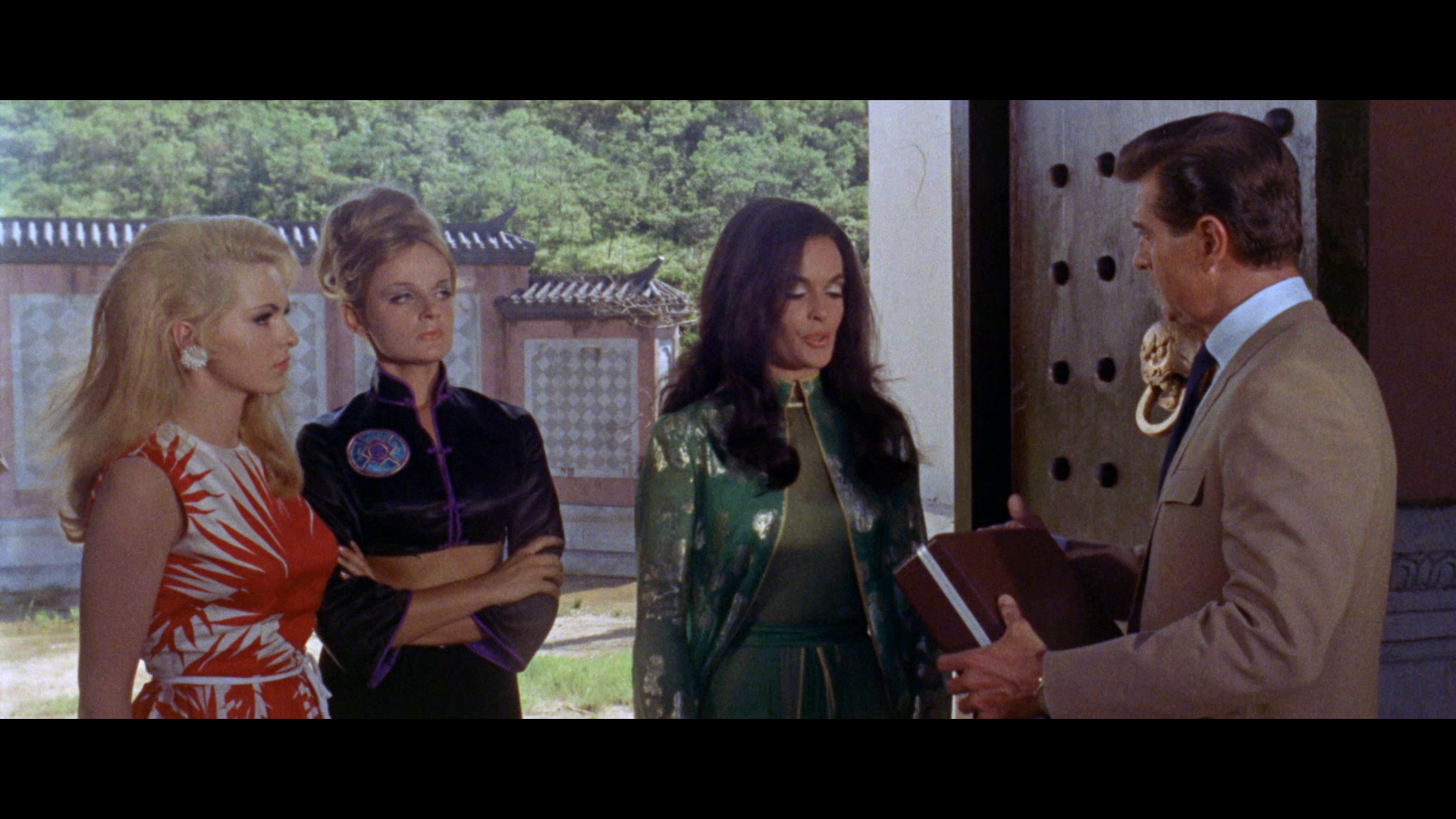
The Million Eyes of Sumuru / The Girl from Rio – Blue Underground (Blu-ray)

Theatrical Release Dates: UK, 1967 (The Million Eyes of Sumuru), West Germany/Spain/USA/UK, 1969 (The Girl from Rio)
Directors: Lindsay Shonteff (The Million Eyes of Sumuru), Jesus Franco (The Girl from Rio)
Cast: Frankie Avalon, George Nader, Shirley Eaton, Wilfrid Hyde-White, Klaus Kinski, Maria Rohm (The Million Eyes of Sumuru), Shirley Eaton, Richard Stapley, George Sanders, Maria Rohm, Marta Reves, Elisa Montés, Beni Cardoso, Herbert Fleischmann (The Girl from Rio)

Release Date: July 1st, 2016
Approximate Running Times: 79 Minutes 6 Seconds (The Million Eyes of Sumuru), 94 Minutes 2 Seconds (The Girl from Rio)
Aspect Ratio: 2.35:1 Widescreen / 1080 Progressive / MPEG-4 AVCC (The Million Eyes of Sumuru), 1.66:1 Widescreen / 1080 Progressive / MPEG-4 AVCC (The Girl from Rio)
Rating: NR
Sound: DTS-HD Mono English (Both Films)
Subtitles: English SDH (Both Films)
Region Coding: Region Free
Retail Price: $19.99

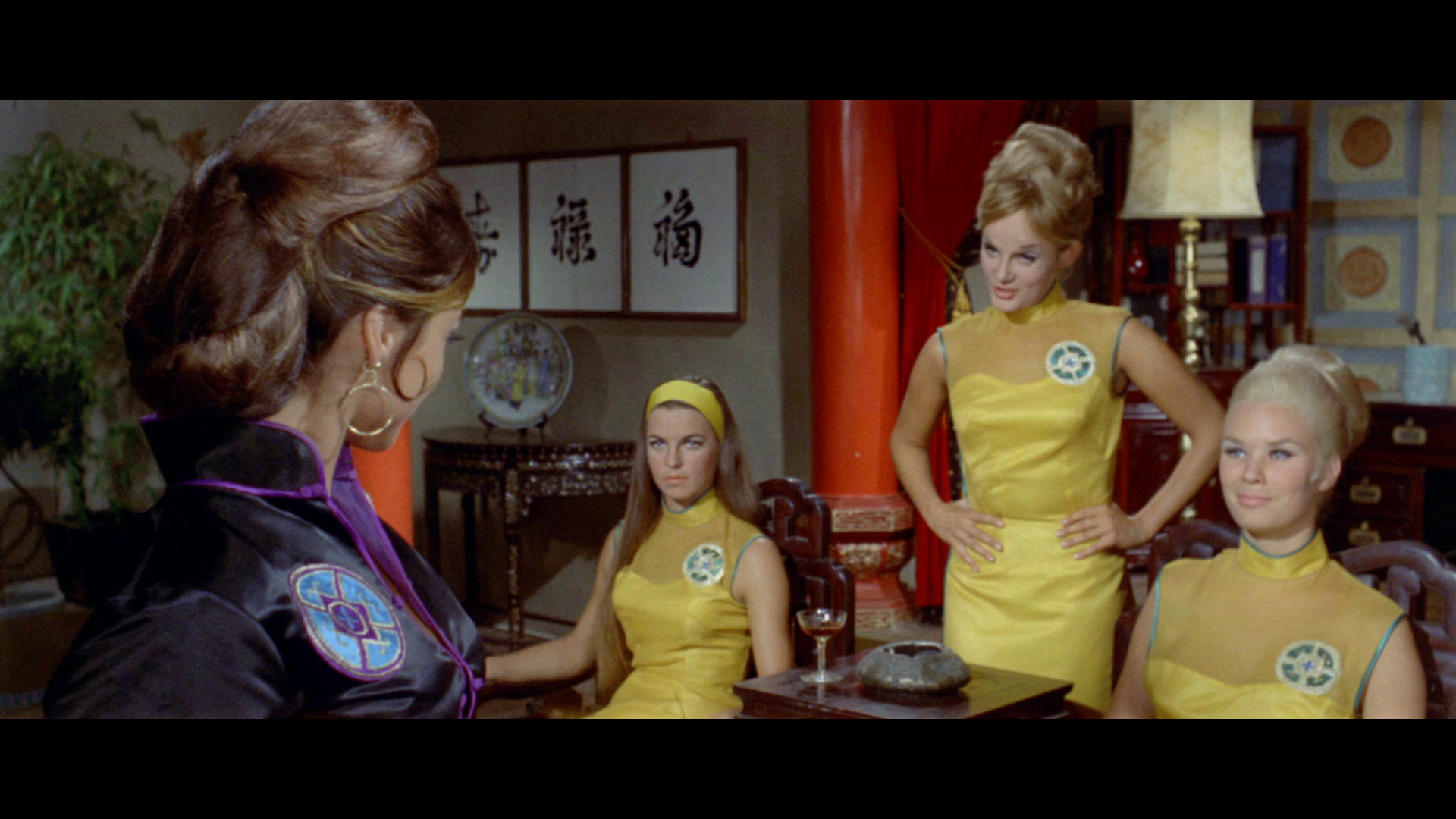
"Two years before THE GIRL FROM RIO, Shirley Eaton (GOLDFINGER) also starred as Sumuru, a beautiful but deadly woman with plans for world domination. When a couple of wise-cracking, swingin’ secret agents uncover her scheme to eliminate male leaders and replace them with sexy undercover female operatives, they rush to Hong Kong and enlist the local police to stop her all-female army of assassins known as THE MILLION EYES OF SUMURU.

In the tradition of BARBARELLA and DANGER: DIABOLIK comes this swinging ‘60s action orgy as bisexual super-villain Sumuru (the luscious Shirley Eaton of GOLDFINGER) launches a diabolical plan to enslave the male species with her army of lusty warrior women.

But when Sumuru kidnaps a fugitive American playboy, she crosses a sadistic crime boss (Academy Award® winner George Sanders of ALL ABOUT EVE and VILLAGE OF THE DAMNED) and ignites a battle of the sexes that will bring Brazil to its knees in more ways than one." - synopsis provided by the distributor

Video: 3.5/5 (The Million Eyes of Sumuru), 3/5 (The Girl from Rio)

Here’s the information provided about The Million Eyes of Sumuru's transfer, "newly remastered in High Definition from the original camera negative for its U.S. home video premiere!"

Here’s the information provided about The Girl from Rio's transfer, "fully restored from the original camera negative!"

The Million Eyes of Sumuru and The Girl from Rio come on a 50 GB dual layer Blu-ray.

Disc Size: 41.2 GB

Feature: 16.7 GB (The Million Eyes of Sumuru), 17.5 GB (The Girl from Rio)

Though the source for The Million Eyes of Sumuru is not as pristine as the source used for The Girl from Rio’s transfer, the result is a transfer that looks more organic. That said, source damage is always minor, and though there are some instances of color fading, colors, for the most part, look very good. Also, the image generally looks crisp, and black levels fare well.

Though The Girl from Rio’s new HD transfer has a solid foundation, it suffers from many of the same issues that Blue Underground’s 99 Women’s and Eugenie... the Story of Her Journey into Perversion’s transfers do. Most notably, digital filtering that eliminates many of these new HD transfers' improvements over previous The Girl from Rio home video releases.

Audio: 4.25/5 (The Million Eyes of Sumuru, The Girl from Rio)

The Million Eyes of Sumuru and The Girl from Rio each come with one audio option, a DTS-HD mono mix in English, and included are removable English SDH subtitles for both films. Both the audio mixes are in very good shape. They both sound clean, clear, balanced, and robust when they need to.

Extras:

Extras for this release include a poster & still gallery, a theatrical trailer for The Million Eyes of Sumuru (2 minutes 34 seconds, DTS-HD mono English, no subtitles), trims from The Girl from Rio (6 minutes 6 seconds, no audio) and an archival featurette titled Rolling in Rio (14 minutes 24 seconds, Dolby Digital stereo English and French with non-removable English subtitles).

Summary:

The Million Eyes of Sumuru is one wacky plot that takes all the spy films' most cliched elements and magnifies them tenfold. When it comes to conquering the world and having all men under her thumb, Sumuru has also developed a gun that shoots darts that turn their targets to stone. Two things that add humor to the story at hand are how Nick West, a CIA agent, only cares about his vacation and can’t be persuaded to help save the world until he is framed for murder. Despite its melting pot of ideas, The Million Eyes of Sumuru works in an odd sort of way.

A lot of The Million Eyes of Sumuru's appeal is due to director Lindsay Shonteff's superb visual eye, which beautifully captures the numerous voluptuous women in this film. Other notable films directed by Lindsay Shonteff include Devil Doll, Licensed to Kill (The Second Best Secret Agent in the Whole Wide World), and Clegg. Also, The Million Eyes of Sumuru features many moments of suspense and plenty of action, including an all-out raid on Sumuru’s fortress. Besides action and suspense, there's an ample amount of humor, notably a moment with Klaus Kinski in the role of President Boong.

But this is another very limited and brief role for Klaus Kinski. He just does not show up and become part of the scenery; his portrayal of President Boong is The Million Eyes of Sumuru's most memorable performance. Reportedly, director Lindsay Shonteff said that Klaus Kinski wanted to make his character even more outlandish than what appears on the screen. Some of Klaus Kinski’s ideas that were never used include sporting a very large tongue while licking women and wanting his character to appear from under a pile of cushions whenever someone enters the room.

The two lead male roles, George Nader (Robot Monster) in the role of Nick West and Frankie Avalon (Beach Party) in the role of Tommy Carter, are serviceable performances. That said, they make an odd duo. In the role of the title character, Sumuru, is Shirley Eaton, who most film fans remember from the James Bond film Goldfinger, whose character's death in that film ranks among the most memorable to ever grace the silver screen. Two years later, she would reprise the role of Sumuru in The Girl from Rio. With the role of Sumuru, she would get a chance to show that she was something more than just a beautiful face and body. Other notable performances in The Million Eyes of Sumuru are Wilfrid Hyde-White (My Fair Lady) and Maria Rohm (Marquis de Sade's Justine). Ultimately, The Million Eyes of Sumuru is an entertaining action/adventure that fans of 1960's spy cinema will get a kick out of.

The Girl from Rio was directed by Jess Franco, a prolific filmmaker whose filmography eclipses two hundred films. Over the course of two years, Jess Franco would collaborate with producer Harry Allen Towers on a total of nine films. The Girl from Rio is their second collaboration and their second adaptation of Sax Rohmer's literary works. Also, the screenplay for The Girl from Rio was written by Harry Allan Towers under the pseudonym Peter Welbeck.

Content-wise, there are some elements in The Girl from Rio's plot that have been ported over from The Million Eyes of Sumuru. With none more glaring than Sumuru’s main modus operandi once again being world domination. With that being said, despite the familiarity between these two films, this is a Jess Franco film, after all, and throughout he injects his unique flourishes. Also, there is one slight upgrade in Sumuru’s quest for world domination. This time around she has two foes: an American playboy who also just happens to have secret agent-like skills and a mobster named Masius.

When compared to its predecessor, The Girl from Rio takes on a distinctively different vibe. The look and feel of The Girl from Rio are similar to that of Jess Franco's Lucky, the Inscrutable. While The Million Eyes of Sumuru was more in line with the action/adventure films Towers produced before his collaborations with Jess Franco.

Another way that The Girl from Rio sets itself apart from its predecessor is that it amps up the eroticism, most notably in its depiction of lesbianism in regards to the Sumuru character. And though there was a hint of S&M in The Million Eyes of Sumuru, it is relatively tame compared to The Girl from Rio.

And when discussing the Jess Franco and Harry Alan Towers collaborations, there is one resource that was never lacking, and that is in regard to casting. Shirley Eaton (Goldfinger) is once again cast in the role of Sumuru, and this time around she exudes more confidence in the role. Other notable cast members include George Sanders (Psychomania) in the role of Masius, a ruthless mobster; and Maria Rohm (Venus in Furs) in the role of Lesley, one of Sumuru’s henchwomen. Ultimately, The Girl from Rio is a very satisfying mix of erotica, kitsch, and mayhem.

The Million Eyes of Sumuru and The Girl from Rio get serviceable transfers that leave plenty of room for improvement.


Written by Michael Den Boer

Brute Corps – Dark Force Entertainment (4k UHD) Theatrical Release Date: USA, 1971 Director: Jerry Jameson Writers: Richard L. Huff, Robert...