Showing posts with label William Grefe. Show all posts

Wednesday, February 21, 2024

Impulse – Grindhouse Releasing (Blu-ray)

Theatrical Release Date: USA, 1974
Director: William Grefé
Writer: Tony Crechales
Cast: William Shatner, Ruth Roman, Jennifer Bishop, Kim Nicholas, James Dobson, Harold Sakata, Marcia Knight, Vivian Lester, William Kerwin, Marcy Lafferty, Chad Walker, Paula Dimitrouleas, Doug Hobart, Lewis Perles

Release Date: March 12th, 2024
Approximate Running Time: 87 Minutes 5 seconds
Aspect Ratio: 1.85:1 Widescreen / 1080 Progressive / MPEG-4 AVC
Rating: NR
Sound: DTS-HD Mono English
Subtitles: English SDH
Region Coding: Region Free
Retail Price: $44.95

"William Shatner stars as Matt Stone, a deranged gigolo who preys on rich women, unable to control his murderous psychosexual urges." - synopsis provided by the distributor

Video: 4.25/5

Here’s the information provided about the transfer, "Spectacular new 4K restoration created from rare archival film elements".

Additional information about the transfer, "Sadly, the negative for Impulse was destroyed many years ago.

The presentation which you are about to see was mastered in 4K from the best existing element, a rare archival 35mm release print.

The print was faded and damaged, but has been restored to the best of our ability."

Impulse comes on a 50 GB dual layer Blu-ray.

Disc Size: 45.8 GB

Feature: 25 GB

Though the disclaimer before the film gives you an idea of the dire straits that source material was in, the result is actually a transfer that far exceeds expectations. That said, Grindhouse Releasing has done a phenomenal job with the source. Flesh tones look healthy, colors look very good, image clarity, contrast, and black levels are strong throughout, compression is solid, and the image always looks organic.

Audio: 4.25/5

This release comes with one audio option, a DTS-HD mono mix in English with removable English SDH. The audio is in great shape; there are no issues with hiss or distortion. Dialog comes through clearly, everything sounds balanced, ambient sounds are well-represented, and range-wise, this track sounds very good.

Extras:

Extras for this release are spread over two discs.

Extras on disc one include theatrical trailer A (1 minute 18 seconds, Dolby Digital mono English, no subtitles), theatrical trailer B (2 minutes 52 seconds, Dolby Digital mono English, no subtitles), 40th anniversary screening Tampa Theater November 7th, 2015 (27 minutes 10 seconds, Dolby Digital stereo English, no subtitles), onset footage titled Shatner Saves Sakata with optional audio commentary with director William Grefé, and optional audio commentary with actor William Shatner (1 minute 31 seconds), a featurette titled The Making of Impulse (14 minutes 27 seconds, Dolby Digital stereo English, no subtitles), and an audio commentary with William Grefé for Impulse.

Other extras on disc include Devil’s Sisters Resurrected Intro (2 minutes 42 seconds, Dolby Digital stereo English, no subtitles), Devil’s Sisters Revisited (9 minutes 21 seconds, Dolby Digital stereo English, no subtitles), Bill Grefé and The Devil’s Sisters (1 minute 20 seconds, Dolby Digital stereo English, no subtitles), The Godmothers Intro by William Grefé (3 minutes 55 seconds, Dolby Digital stereo English, no subtitles), a bonus feature film directed by William Grefé titled The Devil’s Sisters (84 minutes 16 seconds, 1.33:1 aspect ratio, Dolby Digital mono English, no subtitles), and a bonus feature film directed by William Grefé titled The Godmothers (77 minutes 39 seconds, 1.33:1 aspect ratio, Dolby Digital mono English, no subtitles).

Easter Eggs on disc one are a clip of a band playing a song inspired by Impulse; this can be found via the extras menu (5 minutes 45 seconds, Dolby Digital stereo English, no subtitles); a short film titled Tina’s Impulse; this can be found via the main menu (1 minute 56 seconds, Dolby Digital stereo English, no subtitles); a clip where William Grefé discusses Deep Throat; this can be found via the bonus features menu (2 minutes 19 seconds, Dolby Digital stereo English, no subtitles); and a PSA short titled The Dangerous Stranger; this can be found via the setup menu (9 minutes 47 seconds, Dolby Digital mono English, no subtitles).

Extras on disc two include a trailer gallery for other films also available from Grindhouse Releasing, stills galleries: production stills (16 images), press (46 images), Drive-in Delirium newspaper ad gallery with music from Impulse playing in the background, video release (11 images), Bill Grefé (10 images), revival (24 images), and cover art by Dave Lebow (22 images), short films: Thumbs (6 minutes 9 seconds, Dolby Digital stereo English, no subtitles), Iceman (4 minutes 56 seconds, Dolby Digital stereo English, no subtitles), A  Cask of Amontillado (9 minutes 22 seconds, Dolby Digital stereo English, no subtitles), and Underworld (21 minutes 9 seconds, Dolby Digital stereo English, no subtitles), industrial short films: Bacardi: Shatner (19 minutes 32 seconds, Dolby Digital mono English, no subtitles), Fame with William Shatner (12 minutes 9 seconds, Dolby Digital stereo English, no subtitles), and Investing in Movies with Lauren Bacall (23 minutes 1 second, Dolby Digital stereo English, no subtitles), film-making seminars: session 1 (125 minutes 5 seconds, Dolby Digital stereo English, no subtitles), session 2 (103 minutes 7 seconds, Dolby Digital stereo English, no subtitles), and session 3 (80 minutes 23 seconds, Dolby Digital stereo English, no subtitles), an interview with C. Courtney Joyner titled Between the Treks: Shatner in the 1970s (26 minutes 26 seconds, Dolby Digital stereo English, no subtitles), Kingdom of Shatner - William Shatner Live in Santa Monica October 9th, 2022 (64 minutes 37 seconds, Dolby Digital stereo English, no subtitles), an interview with make-up artist Doug Hobart titled The Corpse Speaks (33 minutes 58 seconds, Dolby Digital stereo English, no subtitles), Bill Grefé is Furious (77 minutes 46 seconds, Dolby Digital stereo English, no subtitles), Bill’s Miami Stories (24 minutes 45 seconds, Dolby Digital stereo English, no subtitles), Bill’s Sea Stories (43 minutes 17 seconds, Dolby Digital stereo English, no subtitles), Bill Grefé Zoll interview (12 minutes 34 seconds, Dolby Digital stereo English, no subtitles), Live and Let Die news report (2 minutes 39 seconds, Dolby Digital mono English, no subtitles), and Legend Award (9 minutes 25 seconds, Dolby Digital stereo English, no subtitles).

Easter Eggs on disc two are a clip with C. Courtney Joyner who discusses William Shatner’s Full Moon Fright Night, this can be found via the interviews menu (5 minutes, Dolby Digital stereo English, no subtitles), an interview with William Grefé who discusses I Eat Your Skin, this can be found via the main menu (18 minutes 34 seconds, Dolby Digital stereo English, no subtitles), an outtake with William Grefé and Doug Hobart, this can be found via the film-making seminars menu (1 minute 13 seconds, Dolby Digital stereo English, no subtitles), and an image gallery of Tony Crechales, that can be found via the stills galleries menu (22 images).

Other extras include reversible cover art, a postcard, a slipcover, and 8-page booklet with an essay titled Impulse: A Nerve Throbbing Horrifying Awesome Drama About Evil Taking All Reason or How William Grefé’s Florida Film Scene & Tony Crechales Forbidden Skills Made William Shatner a Super (Anti) Hero Gigolo Beast written by Jacques Boyreau.

Summary:

Impulse: Matt Stone is a gigolo killer who was traumatized as a young boy when he killed one of his mother's lovers. He is on the move again after killing another one of his sugar mama’s because she confronted him about some chick he was seeing on the side. One day, Matt meets a young girl named Tina, whom he gives a ride to. She is going to visit her dead father at the graveyard. Ann Tina’s mother is set up on a blind date with Matt Stone, whom she quickly falls in love with. Does Matt feel the same way about Ann, or is he just waiting for the right moment to take her for everything she has?

There is a pre-credits sequence that perfectly lays the foundation for Matt Stone’s state of mind. He was raised by a promiscuous mother, and when one of her clients gets rough with her, Matt kills the man. This traumatic event serves as the catalyst that ignites Matt Stone’s hatred of women. Shooting in black and white, this sequence does a great job setting the tone for what follows.

Without a doubt, the main reason for checking out Impulse is actor William Shatner, who plays a leisure suit wearing psycho. He not only likes to get it on, but he also likes to take all the money he can from his victims. Over the course of his fifty-plus years in acting, no one has ever accused William Shatner of hamming things up or overacting. It is these two things that make him so enjoyable to watch, no matter what role he is playing. William Shatner gives a solid performance, and despite playing a despicable character, he ends up being the most likeable person in Impulse.

Besides William Shatner, there are a few recognizable faces, like Ruth Roman (Strangers on a Train) in the role of Julia Marstow, an older widower who flirts with Matt Stone the first time she sees him, and Harold Sakata (Goldfinger) in the role of karate Pete, a former associate of Matt Stone. Another cast member of note is Jennifer Bishop (Mako: The Jaws of Death) in the role of Ann Moy, a woman who falls head over heels for Matt Stone. Unfortunately, when it comes to performances, none of the cast holds a candle to William Shatner.

Though William Grefé’s direction is never flashy, it works well within the story at hand, and it lets the performances, especially William Shatner's, take center stage. Also, despite the subject matter being what one expects from a thriller, the result is something that is closer to a melodrama with a few violent outbursts from the protagonist. Ultimately, Impulse’s pros far outweigh its cons, and it is easily William Grefé’s best film.

The Devil’s Sisters: A woman who has escaped a Tijuana brothel describes to the police the hellish conditions she and the other women experienced there.

The Devil’s Sisters is William Grefé’s one and only foray into the roughie film genre. The premise of women who are tricked, abducted, raped, and tortured checks all of the core elements that one would expect from a roughie film. That said, despite the subject that is described above, the result is actually not as in-your-face as most roughie films are.

The narrative, which is mostly told via flashback, does a good job laying out the events that happened to the woman who is in bed near death after a daring escape. And though there are a few moments where things do drag, for the most part, the narrative does a good job moving things forward. Also, it should be noted that The Devil’s Sisters was a film thought to have been lost and that the last 8 minutes no longer exist. For this release, storyboards and comments by William Grefé are used, which help recreate the missing footage.

From a production standpoint, William Grefé does a great job of maximizing his limited resources. Unfortunately, the performances are best described as serviceable. Ultimately, The Devil’s Sisters is a well-made exploitation film that fans of roughie films should enjoy.

The Godmothers: Two mobster brothers dress like women to avoid marrying the Don’s ugly daughter.

William Grefé worked in just about every film genre; he is most known for his films that would be classified as exploitation cinema. Notably, films like Stanley, Impulse, and Mako: The Jaws of Death. When it comes to comedy, The Godmothers is the only time he has worked in this genre. That said, throughout his filmography, there are many instances where his films have been unintentionally funny.

The Godmothers is clearly a sequel to films like The Godfather. There is also a little bit of Some Like It Hot thrown in for good measure. Two men trying to avoid the mob spend most of The Godmothers dressed like women. That said, while in Some Like It Hot they dressed like women and tried to avoid the mob, in The Godmother's avoidance is not the main reason why they dress like women.

The main reason anyone would check out The Godmothers is Mickey Rooney in the role of Rocky Mastrasso, a mobster who has been chosen to marry the don’s ugly daughter. Everything he and the cast do is strictly for laughs; forget any character development or backstory. Also, Mickey Rooney portrays a caricature Asian character like he did in Breakfast at Tiffany’s.

From a production standpoint, The Godmothers is another low-budget affair from William Grefé, who does a good job with what he has to work with. The absurd premise and abundance of outrageous scenarios ensure there is rarely a dull moment. That said, The Godmothers is best described as a series of comedic moments and not much else.

This release is stacked with extras, comes with two bonus feature films, and Impulse has never looked or sounded better on home video, making this a definitive release from Grindhouse Releasing, highly recommended.


Written by Michael Den Boer

Sunday, June 19, 2022

Horror High / Stanley – Vinegar Syndrome (Blu-ray)

Theatrical Release Dates: USA, 1973 (Horror High), USA, 1972 (Stanley)
Director: Larry N. Stouffer (Horror High), William Grefé (Stanley)
Cast: Pat Cardi, Austin Stoker, Rosie Holotik, John Niland, Joye Hash, Jeff Alexander, Mike McHenry (Horror High), Chris Robinson, Alex Rocco, Steve Alaimo, Susan Carroll, Mark Harris, Rey Baumel, Paul Avery, Marcia Knight (Stanley)

Release Date: May 31st, 2022
Approximate Running Times: 83 Minutes 47 Seconds (Horror High), 107 Minutes 20 Seconds (Stanley)
Aspect Ratio: 1.85:1 Widescreen / 1080 Progressive / MPEG-4 AVC (Both Films)
Rating: NR
Sound: DTS-HD Mono English (Both Films)
Subtitles: English SDH (Both Films)
Region Coding: Region Free
Retail Price: $44.98

"In the early 70s, independent filmmakers based in the American south found a fruitful way to make a living in low budget horror movies destined for the drive-in market. Reveling in lurid and absurd concepts, these films are just as much windows into the cultures which bred them as they are wild rides into the most outlandish areas of exploitation cinema. Vinegar Syndrome’s Drive-In Collection presents these two classics of regional horror together on Blu-ray for the first time.

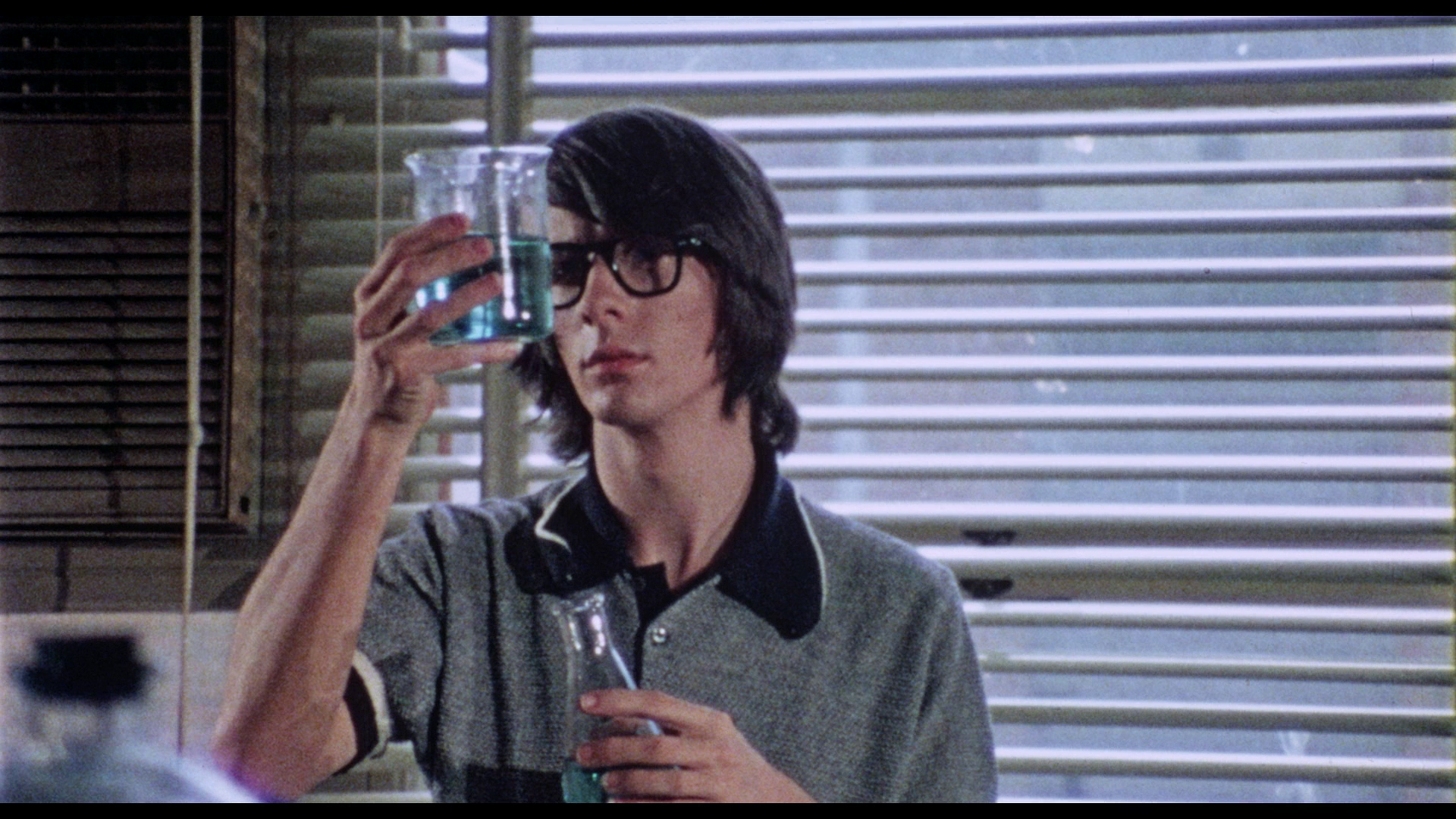
In Larry Stouffer’s Texas lensed HORROR HIGH (1973), bespectacled chemistry nerd Vernon Potts is the target of non-stop bullying from his fellow students and teachers alike, with his only true friend being the class guinea pig, Mr. Mumps. While conducting an experiment using Mr. Mumps as a test subject, Vernon discovers a formula that turns the harmless creature into a snarling beast. After being caught, he drinks the formula himself, transforming into a bloodthirsty killer and begins brutally slaying all those who wronged him.

William Grefé has maintained one of the longest and most diverse careers in exploitation history, all but creating Florida’s exploitation film industry. In STANLEY (1972), his answer to the ‘animals attack’ film craze, Cliff Robinson stars as Tim, a quiet Seminole who finds his life turned upside down by vicious poachers who begin to kill his beloved snakes. Harnessing his powers over them, he uses the slithering creatures to exact murderous revenge against all those who wronged him, eventually kidnapping the daughter of a wealthy business man who is determined to push Tim off of his land…" - synopsis provided by the distributor

Video: 4.5/5 (Horror High), 4.75 (Stanley)

Here’s the information provided about Horror High's transfer, "Newly scanned & restored in 2K from the only known and fully-uncut 16mm lab print."

Horror High comes on a 50 GB dual layer Blu-ray.

Disc Size: 36.7 GB

Feature: 22.9 GB

When compared to previous home video releases of Horror High, this new 2K transfer from Vinegar Syndrome is superior in every way. Colors are nicely saturated, flesh tones look correct, image clarity is strong throughout, black levels look very good, and grain remains intact.

Here’s the information provided about Stanley's transfer, "Newly scanned & restored in 2K from its 35mm original camera negative."

Stanley comes on a 50 GB dual layer Blu-ray.

Disc Size: 44.7 GB

Feature: 29.3 GB

When compared to previous home video releases of Stanley, this new 2K transfer from Vinegar Syndrome is a noticeable improvement in every way. Colors and flesh tones look correct, image clarity and black levels are solid, and the image retains an organic look.

Audio: 4/5 (Horror High, Stanley)

Both Horror High and Stanley have a single audio option, a DTS-HD mono mix in English. Both the audio mixes are in very good shape; dialog comes through clearly, ambient sounds are well-represented, and their scores sound robust. That said, both audio mixes have a few minor silabance related issues. Both films come with removable English SDH subtitles.

Extras:

Extras for Horror High include a theatrical trailer (2 minutes 21 seconds, Dolby Digital mono English, no subtitles), two TV spots (1 minute 3 seconds & 34 seconds, Dolby Digital mono English, no subtitles), an interview with actor John Niland titled I Would Do It Again (10 minutes 5 seconds, Dolby Digital stereo English with removable English SDH subtitles), an interview with actress Michelle Falerne titled Gossip (8 minutes 16 seconds, Dolby Digital stereo English with removable English SDH subtitles), an interview with screenwriter J.D. Feigelson titled Still Amazed (6 minutes 47 seconds, Dolby Digital stereo English with removable English SDH subtitles), an archival interview with Pat Cardi titled Looking Back (14 minutes 3 seconds, Dolby Digital stereo English with removable English SDH subtitles), an interview with Pat Cardi titled Cheerleaders on Tap (18 minutes 37 seconds, Dolby Digital stereo English with removable English SDH subtitles), and an audio commentary with Pat Cardi.

Extras for Stanley include an archival featurette exploring the locations of Stanley with director William Grefé titled Stanley: Revisited (3 minutes 17 seconds, Dolby Digital stereo English with removable English SDH subtitles), an archival Q&A titled Stanley Goes Hollywood from a screening at the New Beverly Cinema (24 minutes 30 seconds, Dolby Digital stereo English with removable English SDH subtitles), an archival extensive making-of documentary titled Dark Side of Eden (44 minutes 44 seconds, Dolby Digital stereo English with removable English SDH subtitles), and an archival audio commentary with screenwriter Gary Crutcher.

Other extras include reversible cover art and an embossed slipcover limited to 5,000 units.

Summary:

Horror High: Though Horror High is filled with cliched high school characters and other elements that are synonymous with horror themed high school films, there’s something oddly endearing about Horror High, a unique take on a familiar story, Robert Louis Stevenson’s Gothic novella, The Strange Case of Dr. Jekyll and Mr. Hyde.

Horror High immediately draws you into its world with a melancholy song titled Vernon's Theme.This song is named after the protagonist, and it also plays again in the closing credits. Vernon's Theme is also one of Horror High's most powerful assets.

The narrative can be broken down into three sections: the first section introduces you to the protagonist, Vernon, and shows you the daily cruelty that's inflicted upon him; the second section is the beginning of his transformation when he becomes an unwilling participant in taking his experimental serum; and the third section sees Vernon fully embrace the monster he’s awakened.

Most of the performances are best described as serviceable. The only performance that leaves any lasting impression is Pat Cardi's (Let’s Kill Uncle, Before Uncle Kills Us). He delivers a strong performance in the role of the tormented protagonist, Vernon Potts.

From a production standpoint, Horror High's positives far outweigh its negatives. The premise is well-executed, the narrative moves at a good pace, and the finale provides a perfect coda. Another area where Horror High does very well is its kill scenes, which have an ample amount of bloodshed. Ultimately, Horror High is a solid low-budget horror film that takes full advantage of its limited resources.

Stanley: Anyone who’s familiar with the films of William Grefé should know what to expect from Stanley. He was a filmmaker who made low-budget films primarily in Florida. Some of his notable films include Impulse and Mako: The Jaws of Death.

Stanley, like most of William Grefé’s films, plays off of whatever genre was popular at that time. And in the case of Stanley, it capitalizes on the natural horror sub-genre which reached its apex of popularity in the 1970’s.

Based solely on its premise, Stanley should have turned out better than it did. For a premise that’s ripe with possibilities, the result is a film that far too often strays away from its greatest asset, snakes. And when the moment finally arrives where the snakes are unleashed, it is too little too late.

The most surprising aspects of Stanley are its performances. With most of the cast delivering strong performances, especially Chris Robinson (The Intruder) in the role of Tim Ochopee, a loner Seminole Indian who has an unusual connection with snakes, another performance of note is Alex Rocco (The Godfather) in the role of Richard Thomkins, a man who wants to make belts out of Tim’s snakes.

At just under 110 minutes, Stanley has a bloated narrative that could have benefited from trimming the narrative by twenty minutes. Also, there are moments of animal cruelty that are sure to turn off many prospective viewers. Ultimately, Stanley is a melodrama that tries to be a horror film.

Horror High and Stanley get a solid release from Vinegar Syndrome. Both films have never looked or sounded better and they come with a wealth of insightful extras, recommended.


Written by Michael Den Boer

Monday, October 18, 2021

He Came from the Swamp: The William Grefé Collection (Standard Edition) - Arrow Video (Blu-ray)

Theatrical Release Dates: USA, 1966 (Sting of Death, Death Curse of Tartu), USA, 1968 (The Hooked Generation), USA, 1971 (The Psychedelic Priest), USA, 1970 (The Naked Zoo), USA, 1976 (Mako: The Jaws of Death), USA, 1977 (Whiskey Mountain), USA, 2016 (They Came from the Swamp: The Films of William Grefé)
Directors: William Grefé (Sting of Death, Death Curse of Tartu, The Hooked Generation, The Psychedelic Priest, The Naked Zoo, Mako: The Jaws of Death, Whiskey Mountain), Daniel Griffith (They Came from the Swamp: The Films of William Grefé)
Cast: Joe Morrison, Valerie Hawkins, John Vella, Jack Nagle, Sandy Lee Kane, Deanna Lund (Sting of Death), Fred Pinero, Babette Sherrill, Bill Marcus, Mayra Gómez Kemp, Sherman Hayes, Gary Holtz, Maurice Stewart, Doug Hobart, Frank Weed (Death Curse of Tartu), Jeremy Slate, Steve Alaimo, John Davis Chandler, Willie Pastrano, William Kerwin (The Hooked Generation), John Darrell, Carolyn Hall (The Psychedelic Priest), Rita Hayworth, Steve Oliver, Fay Spain, Ford Rainey, Willie Pastrano, Fleurette Carter (The Naked Zoo), Richard Jaeckel, Jennifer Bishop, Buffy Dee, Harold Sakata, John Davis Chandler (Mako: The Jaws of Death), Christopher George, Preston Pierce, Roberta Collins, Linda Borgeson, John Davis Chandler, William Kerwin, J.G. Patterson Jr. (Whiskey Mountain)

Release Date: October 25th, 2021 (UK), October 26th, 2021 (USA)
Approximate running times: 80 Minutes 6 Seconds (Sting of Death), 87 Minutes 39 Seconds (Death Curse of Tartu), 94 Minutes 28 Seconds (The Hooked Generation), 80 Minutes 34 Seconds (The Psychedelic Priest), 92 Minutes 2 Seconds (The Naked Zoo Director’s Cut), 86 Minutes 53 seconds (The Naked Zoo Barry Mahon Version), 86 Minutes 1 Second (Mako: The Jaws of Death), 90 Minutes 2 seconds (Whiskey Mountain), 126 Minutes 50 Seconds (They Came from the Swamp: The Films of William Grefé)
Aspect Ratio: 1.85:1 Widescreen / 1080 Progressive / MPEG-4 AVC (Sting of Death, Death Curse of Tartu, The Naked Zoo, Mako: The Jaws of Death), 2.35:1 Widescreen / 1080 Progressive / MPEG-4 AVC (Whiskey Mountain), 1.33:1 Aspect Ratio (The Hooked Generation, The Psychedelic Priest), 1.78:1 Widescreen / 1080 Progressive / MPEG-4 AVC (They Came from the Swamp: The Films of William Grefé)
Rating: 15 (UK), NR (USA)
Sound: LPCM Mono English (Sting of Death, Death Curse of Tartu, The Hooked Generation, The Psychedelic Priest, The Naked Zoo, Mako: The Jaws of Death, Whiskey Mountain), LPCM Stereo English (They Came from the Swamp: The Films of William Grefé)
Subtitles: English SDH (Sting of Death, Death Curse of Tartu, The Hooked Generation, The Psychedelic Priest, The Naked Zoo, Mako: The Jaws of Death, Whiskey Mountain)
Region Coding: Region Free
Retail Price: £74.99 (UK), $99.95 (USA)

"Killer sharks and human jellyfish and living mummies, oh my! Arrow Video is proud to present the first ever collection of works by William “Wild Bill” Grefé, the maverick filmmaker who braved the deep, dark depths of the Florida everglades to deliver some of the most outrageous exploitation fare ever to go-go dance its way across drive-in screens.

Bringing together seven of Grefé’s most outlandish films, plus a feature length documentary on the filmmaker's career, He Came from the Swamp: The William Grefé Collection packs in a macabre menagerie of demented jellyfish men (Sting of Death), zombified witch doctors (Death Curse of Tartu), homicidal hippies (The Hooked Generation) and seductive matrons (The Naked Zoo) – not to mention the ubiquitous go-go dancing – to create one of the most wildly entertaining box-sets of all time!" - synopsis provided by the distributor

Video: (Sting of Death 3.5/5, Death Curse of Tartu 2.5/5, The Hooked Generation 3/5, The Psychedelic Priest 2.5/5, The Naked Zoo 3.5/5, Mako: The Jaws of Death 3/5, Whiskey Mountain 2.5/5)

Here’s the information given about the transfers, “All the films included in this collection have been restored from the best available materials. Whilst every effort has been made to offer up the best possible presentations, the results inevitably vary according to the condition of the source materials, some of which were in poor shape. We hope that this does not affect your enjoyment of the films.

Sting of Death was scanned from its original 35mm negative. The audio was sourced from a 35mm optical track negative.

Death Curse of Tartu was scanned from a 16mm print. The audio was also sourced from this print. The 16mm print – presumably a TV print – was found to have been trimmed for gore, so these missing shots were sourced from a lesser copy 35mm print and reinstated.

The Hooked Generation was scanned from a 16mm internegative. The audio was sourced from a 16mm optical track negative.

The Psychedelic Priest (AKA Electric Shades of Grey ) was scanned from a 16mm Ektachrome release print. The audio was also sourced from this print.

The Naked Zoo was scanned from its original 35mm negative, which had been recut to the Barry Mahon version of the film. In order to recreate William Grefé ‘s original director’s cut, the footage unique to that version was sourced from a badly faded and warped 35mm workprint. The audio was sourced from a 35mm double edged track print and a 35mm track negative.

Mako: Jaws of Death was scanned from two 16mm prints, which were composited for best quality sections of each. The audio was also sourced from these prints.

Whiskey Mountain was scanned from a 16mm scope print. The audio was also sourced from this print.

All materials used in these restorations were supplied William Grefé , Lisa Petrucci / Something Weird Video, Vinegar Syndrome, Ed Tucker, and American Genre Film Archive.”

Sting of Death and Death Curse of Tartu comes on a 50 GB dual layer Blu-ray.

Disc Size: 45.3 GB

Feature: 20.8 GB (Sting of Death), 19.8 GB (Death Curse of Tartu)

The Hooked Generation and The Psychedelic Priest comes on a 50 GB dual layer Blu-ray.

Disc Size: 46.2 GB

Feature: 21.1 GB (The Hooked Generation), 19.8 GB (The Psychedelic Priest)

The Naked Zoo and Mako: The Jaws of Death comes on a 50 GB dual layer Blu-ray.

Disc Size: 46.5 GB

Feature: 16.2 GB (The Naked Zoo Director’s Cut), 10.4 GB (The Naked Zoo Barry Mahon Version), 15.2 GB (Mako: The Jaws of Death)

Whiskey Mountain and They Came from the Swamp: The Films of William Grefé comes on a 50 GB dual layer Blu-ray.

Disc Size: 46 GB

Feature: 17.6 GB (Whiskey Mountain), 21.8 GB (They Came from the Swamp: The Films of William Grefé)

Though the source used for Sting of Death is one of strongest sources used for He Came from the Swamp: The William Grefé Collection. Throughout the presentation there is source related damage that varies in degree throughout. That said, outside of a few moments, colors look very good, details and black levels look strong throughout, there are no issues with compression and the transfer retains an organic look.

The source used for Death Curse of Tartu has print related damage that varies in degree throughout, though colors fare well there are instances of color fluctuation, the image generally looks crisp, there are no issues with compression and the transfer retains an organic look.

The source used for The Hooked Generation has print related damage that varies in degree throughout, though colors fare well there are instances of color fluctuation, the image generally looks crisp, there are no issues with compression and the transfer retains an organic look.

The source used for The Psychedelic Priest has noticeable print related damage throughout the presentation, colors fluctuate and look faded and black levels are best described as adequate. That said, the image generally looks crisp, there are no issues with compression and the image retains an organic look.

The sources used for The Naked Zoo appear to come from too different sources. With the footage reinstated for William Grefé’s director’s cut looking rough, colors look faded and there is noticeable print damage. That said, footage that both versions of The Naked Zoo looks considerably better, colors and black levels look very good, the image looks crisp and there are no issues with compression. Overall both versions of The Naked Zoo retain an organic look.

The source for Mako: The Jaws of Death exhibits source related damage, color fluctuation and black levels are adequate. That said, the image generally looks crisp, there are no issues with compression and the image retains an organic look.

Whiskey Mountain’s source looks rough and has seen better days. There’s noticeable print related damage throughout the presentation, colors fluctuate and look faded and black levels are best described as adequate. That said, the image generally looks crisp, there are no issues with compression and the image retains an organic look.

They Came from the Swamp: The Films of William Grefé is a documentary that uses a variety of sources which vary in quality. That said, the newly shot interviews look better than archival sources and clips from films.

Audio: (Sting of Death 3/5, Death Curse of Tartu 3/5, The Hooked Generation 3/5, The Psychedelic Priest 3/5, The Naked Zoo 3.5/5, Mako: The Jaws of Death 3/5, Whiskey Mountain 3/5)

Each film comes with one audio option, a LPCM mono mix in English, and all films come with removable English SDH subtitles. Despite their limited range, all the films sound clear and balanced.

They Came from the Swamp: The Films of William Grefé comes with one audio option, a LPCM stereo mix in English. The audio sounds clear and balanced throughout.

Extras:

Extras for Sting of Death and Death Curse of Tartu include reversible cover art, a trailer for Sting of Death (2 minutes 6 seconds, Dolby Digital mono English, no subtitles), a trailer for Death Curse of Tartu (1 minute 34 seconds, Dolby Digital mono English, no subtitles), an introduction to Sting of Death by William Grefé (2 minutes 51 seconds, Dolby Digital stereo English, no subtitles), an introduction to Death Curse of Tartu by William Grefé (3 minutes 13 seconds, Dolby Digital stereo English, no subtitles), an interview with monster maker Doug Hobart titled The Curious Case of Dr. Traboh: Spook Show Extraordinaire (10 minutes 50 seconds, Dolby Digital stereo English, no subtitles), an interview with author/historian C. Courtney Joyner titled Sting of Death: Beyond the Movie – Monsters a-Go Go! (11 minutes 43 seconds, Dolby Digital stereo English, no subtitles) and two archival audio commentaries’ Sting of Death and Death Curse of Tartu with William Grefé and filmmaker Frank Henenlotter.

Extras for The Hooked Generation and The Psychedelic Priest include reversible cover art, The Hooked Generation stills gallery (40 images-stills/posters/lobby cards/home video art), an introduction to The Hooked Generation by William Grefé (2 minutes 40 seconds, Dolby Digital stereo English, no subtitles), an introduction to The Psychedelic Priest by William Grefé (2 minutes 15 seconds, Dolby Digital stereo English, no subtitles), The Hooked Generation Behind-The-Scenes footage (23 minutes 29 seconds, Dolby Digital stereo), a featurette with author/film historian Chris Poggial titled Beyond the Movie: That's Drugsploitation! (7 minutes 51 seconds, Dolby Digital stereo English, no subtitles), a featurette with author/film historian Chris Poggial titled Beyond the Movie: The Ultimate Road Trip (8 minutes 22 seconds, Dolby Digital stereo English, no subtitles) and archival audio commentary tracks with director William Grefé and Frank Henenlotter for The Hooked Generation and The Psychedelic Priest.

Extras for The Naked Zoo and Mako: The Jaws of Death include reversible cover art, stills galleries: The Naked Zoo (12 images-poster/stills/press book) and Mako: The Jaws of Death (49 images-posters/stills/advertisements/home video art), Mako: The Jaws of Death trailer and promo gallery: original theatrical trailer (1 minute 35 seconds, Dolby Digital mono English, no subtitles), original promo (10 minutes 24 seconds, Dolby Digital mono English, no subtitles), CBS promo (33 seconds, Dolby Digital mono English, no subtitles) and behind-the-scenes news segment (2 minutes 9 seconds, Dolby Digital mono English, no subtitles), Mako: The Jaws of Death super-8 digest version (15 minutes 6 seconds, Dolby Digital mono English, no subtitles), an introduction to The Naked Zoo by William Grefé (2 minutes 42 seconds, Dolby Digital stereo English, no subtitles), an introduction to Mako: The Jaws of Death by William Grefé (4 minutes 6 seconds, Dolby Digital stereo English, no subtitles), an audio interview with filmmaker Robert Morgan titled Sharks, Stalkers, and Sasquatch (10 minutes 28 seconds, Dolby Digital stereo English, no subtitles), an audio interview with actress Jenifer Bishop titled The Aquamaid Speaks! (9 minutes 49 seconds, Dolby Digital stereo English, no subtitles), a featurette titled Beyond the Movie: That’s Sharksploitation! (7 minutes 27 seconds, Dolby Digital stereo English, no subtitles), audio commentary tracks with director William Grefé for The Naked Zoo and Mako: The Jaws of Death and The Naked Zoo Barry Mahon version (86 minutes 53 seconds, Dolby Digital mono English, no subtitles).

Extras for Whiskey Mountain and They Came from the Swamp: The Films of William Grefé include reversible cover art, a radio spot for Whisky Mountain (33 seconds, Dolby Digital mono English, no subtitles), a trailer for Whiskey Mountain (1 minute 16 seconds, Dolby Digital mono English, no subtitles), a TV segment about Whiskey Mountain (1 minute 27 seconds, Dolby Digital mono English, no subtitles), an archival featurette with William Grefé visiting locations from his films (5 minutes 26 seconds, Dolby Digital stereo English, no subtitles), an introduction to Whiskey Mountain by William Grefé (2 minutes 54 seconds, Dolby Digital stereo English, no subtitles), They Came from the Swamp: The Films of William Grefé deleted scenes: Grinter on Grinter (2 minutes 12 seconds, Dolby Digital stereo English, no subtitles), Deathbed Confessions (1 minute 1 second, Dolby Digital stereo English, no subtitles), Shatner on the Rocks (2 minutes 41 seconds, Dolby Digital stereo English, no subtitles) and Paging Dr. Crutcher (1 minute 15 seconds, Dolby Digital stereo English, no subtitles), a short film directed by William Grefé titled Bacardi and Coke Bonanza ’81 (7 minutes 29 seconds, Dolby Digital stereo English, no subtitles), a featurette about Crown International Pictures titled The Crown Jewels (17 minutes 24 seconds, Dolby Digital stereo English, no subtitles), bonus trailer gallery: The Weird World of LSD (2 minutes 50 seconds, Dolby Digital mono English, no subtitles), Fireball Jungle (22 seconds, Dolby Digital mono English, no subtitles), The King of the Jungle (1 minute 18 seconds, Dolby Digital mono English, no subtitles), The Magic Legend of the Juggler (32 seconds, Dolby Digital mono English, no subtitles), Bloody Friday (2 minutes 9 seconds, Dolby Digital mono English, no subtitles) and Super Chick (32 seconds, Dolby Digital mono English, no subtitles) and an audio commentary with director William Grefé for Whiskey Mountain.

Summary:

Sting of Death: A jellyfish monster terrorizes a marine biologist, his daughter and her friends.

The Sting of Death, on the other hand, is a good old-fashioned creature feature. From a production standpoint, Sting of Death, like William Grefé’s other films, suffers from an anemic budget that features shoddy special effects that call attention to themselves, a jellyfish monster that’s obviously a man wearing a plastic bag over his head, and wooden performances that further hinder Sting of Death.

After a strong opening sequence that serves as a prelude to the carnage about to be unleashed by the jellyfish monster, Things slow down considerably, until the jellyfish monster resurfaces. Those expecting anything more than a z-cinema with few surprises should look elsewhere, whereas those who enjoy a healthy dose of schlock cinema will enjoy Sting of Death.

Death Curse of Tartu: A group of student archaeologists' excursion into the Florida Everglades disturbs a native American witch doctor who comes back to life.

Shortly after completing Sting of Death, William Grefé put together Death Curse of Tartu, another creature feature with a similar vibe. And the result is yet another improvised film that has all the hallmarks of low-budget cinema.

Once again, William Grefé puts together a solid opening sequence, that’s unfortunately not indicative of what’s to follow. Most of the narrative follows characters doing mundane things, who fortunately fall prey to a killer native American witch doctor.

That said, despite the Death Curse of Tartu’s obvious limitations, All is not lost. The special effects are actually very effective, despite their crudeness, and another strength is how well the Death Curse of Tartu exploits swampy locations.

The Hooked Generation: Dope peddlers hiding from law enforcement kidnap a couple.

Like most of William Grefé’s films, The Hooked Generation was inspired by a film/genre that was popular at that time. And in the case of The Hooked Generation, it takes inspiration from the counterculture drug-themed films from the late 1960’s.

Content wise, The Hooked Generation has all the elements that fans of exploitation cinema have come to expect. It has a good foundation and the narrative does a good job of holding your attention, despite its in-your-face subject-matter. Also, the performances exceeded expectations, especially Jeremy Slate, John Davis Chandler, and Willie Pastrano, who portray the drug smugglers. Another strength of The Hooked Generation is how effectively it exploits its limited resources. Ultimately, The Hooked Generation is a grimy film that fans of exploitation cinema should thoroughly enjoy.

The Psychedelic Priest: A priest goes on a road trip after being drugged by a group of teenagers.

In the extras provided as part of this release, William Grefé explains how there was no screenplay and how the entire film was essentially improvised. Though The Psychedelic Priest has a counterculture vibe like The Hooked Generation, The result is two films that wouldn’t be more unalike.

From a production standpoint, The Psychedelic Priest far exceeds its anemic resources. And though the premise is well-executed, there are many moments where the directionless narrative drags. That said, The Psychedelic Priest’s strongest asset is John Darrell’s portal of Father John, a priest on a bad trip.

The Naked Zoo: A struggling author who moonlights as a gigolo seduces an affection-starved older woman.

The Naked Zoo epitomizes low-budget 1970’s exploitation cinema. Though most of these films are constrained by their limited resources, One way many of these films garnered attention was by casting a named, recognizable actor or actress who was in the twilight of their career. For example, Rita Hayworth (Cover Girl, The Lady from Shanghai) was cast in The Naked Zoo.

Content wise, The Naked Zoo is a melodrama that never strays too far away from elements that have become synonymous with 1970’s exploitation cinema. The narrative revolves around an author whose affairs with older women put his life in danger when one of the women’s husbands walks in on him seducing their wives.

Performance wise, the cast ranges from adequate to good. With The Naked Zoo’s strongest performance being Steve Oliver’s (Werewolves on Wheels, The Van) portrayal of Terry Shaw, the struggling author who exploits attention starved older women. Another performance of note is Rita Hayworth in the role of Mrs. Golden, the wife of a wheelchair-bound man who tries to kill Terry.

From a production standpoint, The Naked Zoo does a good job maximizing its limited resources. Though the premise is well-executed, the narrative has too many lulls and the finale is lacking a strong payoff. That said, the visuals are one area where The Naked Zoo most exceeds expectations. Ultimately, The Naked Zoo is a flawed film that most likely would have been forgotten if it were not for Rita Hayworth’s appearance.

Mako: The Jaws of Death: A man who’s learned how to talk to sharks through telepathy goes on a rampage when those he entrusted with the sharks he helped them procure betray him.

When one thinks of shark films, Jaws immediately springs to mind. And though there have been many shark films that bear no connection to Jaws, Most of these films get overlooked because of the damage done by all the Jaws clones.

This brings us to a film like Mako: The Jaws of Death, which takes shark films in a direction opposite of Jaws.

With a title like Mako: The Jaws of Death, one would expect a body count scenario where sharks attack a man. This is not the case with Mako: The Jaws of Death. With all the shark attacks in Mako: The Jaws of Death being linked to characters who posed danger to the sharks, There are no unprovoked attacks in Mako: The Jaws of Death.

Performance wise, the cast are all very good in their receptive roles, especially Richard Jaeckel (Grizzly, Day of the Animals) in the role of Sonny Stein, a man who’s forged an unusual bond with sharks. Notable cast members include Harold Sakata (Goldfinger) in the role of a shark hunter, and Jennifer Bishop (The Female Bunch, Impulse) in the role of a woman who entertains bar patrons by swimming in a tank.

From a production standpoint, Mako: The Jaws of Death is a film that often exceeds expectations. The premise is superbly realized, the narrative is well-executed and the finale provides a perfect coda. Another strength of Mako: The Jaws of Death are its underwater sequences with sharks. Ultimately, Mako: The Jaws of Death is a film that fans of man versus nature are sure to get the most mileage out of.

Whiskey Mountain: Locals don't want two couples snooping around Whiskey Mountain looking for buried Civil War confederate rifles.

But there’s no denying the influence rural survival films like Deliverance had on Whiskey Mountain. To call Whiskey Mountain a Deliverance knock-off would be doing Whiskey Mountain a great disservice. Where most rural survival films from the 1970’s tried to mimic Deliverance, Whiskey Mountain is one of the rare examples of a film that brings something new to the table. And nowhere is this clearer than when it comes to bad guys lurking in the woods, Whiskey Mountain's motivation for keeping outsiders away.

Whiskey Mountain is a text-book example of why one should never judge a book by its cover. The film’s title, Whiskey Mountain, evokes moonshine, and yet there’s no moonshine to be found in Whiskey Mountain. And the opening setup of Whiskey Mountain gives the impression that what’s about to unfold is an adventure film that involves treasure (Confederate rifles buried somewhere on Whiskey Mountain). When in reality, what lays ahead is a much bleaker narrative.

The most surprising aspect of Whiskey Mountain is the performances. With the most memorable performance being John Davis Chandler’s (Ride the High Country, Drag Racer) menacing portrayal of Rudy, the ringleader behind what’s really going on at Whiskey Mountain. Another performance of note is that of Robert Leslie in the role of a deranged old man who wanders around Whiskey Mountain. Notable cast members include Christopher George (City of the Living Dead, Pieces), Roberta Collins (Wonder Women, Eaten Alive) and William Kerwin (Scum of the Earth, Blood Feast).

From a production standpoint, though, Whiskey Mountain has all the hallmarks of low-budget filmmaking. The result is a film that far exceeds its anemic resources. Most notably, the Whiskey Mountains' use of Polaroid photos for its most grueling moment, a rape scene. The premise is well-executed and though the narrative is slow-moving initially, once the frantic last act arrives, Whiskey Mountain is hitting on all cylinders. Ultimately, Whiskey Mountain is a film that fans of Hixploitation and 1970’s exploitation cinema will get the most mileage out of.

They Came from the Swamp: The Films of William Grefé: “Savage. Sadistic. Thrill hungry. When it came to independent filmmaking in the sunshine state, William Grefé was the wildest of the wild. Now, the untold story of Florida’s most daring moviemaker comes to the screen.” Ballyhoo Motion Pictures

They Came from the Swamp: The Films of William Grefé is an insightful documentary that provides a well-rounded overview of William Grefé’s films. They Came from the Swamp: The Films of William Grefé features comments from William Grefé, cast and crew who worked with him, filmmakers Frank Henenlotter, Herschell Gordon Lewis and film critics/historians.

At just over two hours in length, They Came from the Swamp: The Films of William Grefé leaves no stone unturned. This documentary not only provides background information about William Grefé’s most known films, but also information about films that have not been widely available since their initial releases.

Having only seen one of William Grefé’s films (Impulse) before watching They Came from the Swamp: The Films of William Grefé. It was one of the rare times that I have been able to delve into a filmmaker without being familiar with their films. Finally, They Came from the Swamp: The Films of William Grefé is a must-see for fans of exploitation cinema.

Arrow Video reissues He Came from the Swamp: The William Grefé Collection, their exemplary release that collects seven films directed by William Grefé, has an exceptional documentary about William Grefé and comes with a wealth of extra content, highly recommended.


Written by Michael Den Boer

Visitor Q: Limited Edition – New Wave Video (Blu-ray) Theatrical Release Date: Japan, 2001 Director: Takashi Miike Writer: Itaru Era Cast: ...