Shawscope Volume Two: Limited Edition – Arrow Video (Blu-ray/CD Combo)

Theatrical Release Dates: Hong Kong, 1978 (The 36th Chamber of Shaolin, Invincible Shaolin), Hong Kong, 1979 (Mad Monkey Kung Fu, Five Superfighters, The Kid with the Golden Arm, The Magnificent Ruffians), Hong Kong, 1980 (Return to the 36th Chamber, Ten Tigers from Kwangtung), Hong Kong, 1981 (My Young Auntie), Hong Kong , 1982 (Mercenaries from Hong Kong), Hong Kong, 1983 (The Boxer's Omen), Hong Kong, 1985 (Disciples of the 36th Chamber), Hong Kong, 1986 (Martial Arts of Shaolin), Hong Kong, 1993 (The Bare-Footed Kid)
Directors: Lau Kar-leung (The 36th Chamber of Shaolin, Return to the 36th Chamber, Disciples of the 36th Chamber, Mad Monkey Kung Fu, My Young Auntie, Martial Arts of Shaolin), Mar Lo (Five Superfighters), Chang Cheh (Invincible Shaolin, The Kid with the Golden Arm, The Magnificent Ruffians, Ten Tigers from Kwangtung), Wong Jing (Mercenaries from Hong Kong), Kuei Chih-Hung (The Boxer's Omen), Johnnie To (The Bare-Footed Kid)
Cast: Chia-Hui Liu (Gordon Liu), Yue Wong, Lieh Lo, Chia-Yung Liu, Norman Chu (The 36th Chamber of Shaolin), Chia-Hui Liu (Gordon Liu), Lung-Wei Wang, Hou Hsiao, Lun Hua, Yeong-moon Kwon, Kara Wai, Szu-Chia Chen, Tsui-Ling Yu (Return to the 36th Chamber), Chia-Hui Liu (Gordon Liu), Hou Hsiao, Lily Li, Jason Piao Pai, Chia-Liang Liu, Li Wang, Hui-Huang Lin, Hsin-Nan Hung (Disciples of the 36th Chamber), Chia-Liang Liu, Hou Hsiao, Kara Wai, Lieh Lo (Mad Monkey Kung Fu), Chiu-Sing Hau, Siu-Hung Leung, Austin Wai, Mo Yuen, Kwan Fung, Wei-Wei Huang, Jamie Luk, Hui-Huang Lin (Five Superfighters), Phillip Chung-Fung Kwok, Lo Meng, Lu Feng, Wei Pai, Chiang Sheng, Sun Chen, Wong Lung Wei (Invincible Shaolin, The Kid with the Golden Arm), Phillip Chung-Fung Kwok, Lo Meng, Lu Feng, Chiang Sheng, Wang Li (The Magnificent Ruffians), Chin Siu-ho, Ti Lung, Fu Sheng, Wei Pai, Dick Wei, Sun Chien, Lu Feng, Phillip Chung-Fung Kwok (Ten Tigers from Kwangtung), Kara Hui, Lau Kar-leung, Hou Hsiao, Chia-Hui Liu (Gordon Liu), Wang Lung Wei (My Young Auntie), Ti Lung, Wong Yue, Michael Wai-Man Chan, Yu On On, Chan Pak Cheung, Lo Lieh, Phillip Ko (Mercenaries from Hong Kong), Phillip Ko, Shao-Yen Lin, Kar-Man Wai, Wang Lung-wei, Bolo Yeung (The Boxer's Omen), Jet Li, Huang Qiuyan, Hu Jianqiang, Yu Chenghui, Yu Hai (Martial Arts of Shaolin), Aaron Kwok, Maggie Cheung, Ti Lung, Jacklyn Wu (The Bare-Footed Kid)
Release Date: November 21st, 2022 (UK), December 6th, 2022 (USA)
Approximate Running Times: 115 Minutes 53 Seconds (The 36th Chamber of Shaolin), 101 Minutes 9 Seconds (Return to the 36th Chamber), 93 Minutes 20 Seconds (Disciples of the 36th Chamber), 115 Minutes 35 Seconds (Mad Monkey Kung Fu), 100 Minutes 16 Seconds (Five Superfighters), 106 Minutes 12 Seconds (Invincible Shaolin), 86 Minutes 18 Seconds (The Kid with the Golden Arm), 105 Minutes 54 Seconds (The Magnificent Ruffians), 90 Minutes 59 Seconds (Ten Tigers from Kwangtung), 119 Minutes 12 Seconds (My Young Auntie), 95 Minutes 27 Seconds (Mercenaries from Hong Kong), 105 Minutes 27 Seconds (The Boxer's Omen), 93 Minutes 50 Seconds (Martial Arts of Shaolin), 86 Minutes 42 Seconds (The Bare-Footed Kid)
Aspect Ratio: 2.35:1 Widescreen / 1080 Progressive / MPEG-4 AVC (The 36th Chamber of Shaolin, Return to the 36th Chamber, Disciples of the 36th Chamber, Mad Monkey Kung Fu, Five Superfighters, Invincible Shaolin, The Kid with the Golden Arm, The Magnificent Ruffians, Ten Tigers from Kwangtung, My Young Auntie, Mercenaries from Hong Kong, Martial Arts of Shaolin), 1.85:1 Widescreen / 1080 Progressive / MPEG-4 AVC (The Boxer's Omen, The Bare-Footed Kid)
Rating: 18 (UK), NR (USA)
Sound: DTS-HD Mono Cantonese (All Films), DTS-HD Mono Mandarin (All Films), DTS-HD Mono English (The 36th Chamber of Shaolin, Return to the 36th Chamber, Disciples of the 36th Chamber, Mad Monkey Kung Fu, Five Superfighters, Invincible Shaolin, The Kid with the Golden Arm, The Magnificent Ruffians, Ten Tigers from Kwangtung, My Young Auntie, Mercenaries from Hong Kong, Martial Arts of Shaolin, The Bare-Footed Kid)
Subtitles: English, English SDH (All Films)
Region Coding: Region A,B
Retail Price: £110.00 (UK), $189.95 (USA)
"Picking up where Volume One left off, this sophomore collection of Hong Kong cinema classics draws together many of the best films from the final years of the Shaw Brothers studio, proving that while the end was nigh, these merchants of martial arts mayhem weren’t going to go out without a fight! Armed with stunning special features and ravishing new restorations, this boxset is even bigger and bolder than the last one.
We begin with kung fu master Lau Kar-leung’s instant classic The 36th Chamber of Shaolin, in which his adoptive brother Gordon Liu achieved overnight stardom as the young man who unexpectedly finds spiritual enlightenment on the path to vengeance; Lau and Liu followed the original with two comically inventive sequels, Return to the 36th Chamber and Disciples of the 36th Chamber, both included here. Already established as a genius at blending dazzling action with physical comedy, Lau himself plays the lead role in the hilarious Mad Monkey Kung Fu, coupled here with Lo Mar’s underrated Five Superfighters. Next, we once again meet Chang Cheh’s basher boy band the Venom Mob in no less than four of their best-loved team-ups: Invincible Shaolin, The Kid with the Golden Arm, Magnificent Ruffians and culminating in the all-star Ten Tigers of Kwangtung, co-starring Ti Lung and Fu Sheng.
After Lau brings us perhaps his best high-kicking comedy with My Young Auntie, a playful star vehicle for his real-life muse Kara Hui, we see Shaw Brothers fully embracing Eighties excess in our strangest double feature yet: Wong Jing’s breathtakingly wild shoot-‘em-up Mercenaries from Hong Kong, and Kuei Chih-hung’s spectacularly unhinged black magic meltdown The Boxer’s Omen. Last but certainly not least, Lau Kar-leung directs the last major Shaw production, Martial Arts of Shaolin, filmed in mainland China with a hot new talent named Jet Li in the lead role; it is paired in this set with The Bare-Footed Kid, a reverent remake of a Chang Cheh classic with Johnnie To (Running Out of Time) in the director’s chair and Lau back on fight choreography duties, in arguably the ultimate filmed tribute to Shaws’ everlasting cinematic legacy." - synopsis provided by the distributor
Video: 4.5/5 (The 36th Chamber of Shaolin), 4.25/5 (Mad Monkey Kung Fu, Five Superfighters, Invincible Shaolin, The Kid with the Golden Arm, The Magnificent Ruffians, Ten Tigers of Kwangtung, Mercenaries from Hong Kong, The Boxer's Omen), 3.75/5 (Return to the 36th Chamber, Disciples of the 36th Chamber, My Young Auntie, Martial Arts of Shaolin, The Bare-Footed Kid)
Here’s the information provided about The 36th Chamber of Shaolin's transfer, "Brand new 4K restoration by Celestial Pictures and L’Immagine Ritrovata."
The 36th Chamber of Shaolin comes on a 50 GB dual layer Blu-ray.
Disc Size: 46.3 GB
Feature: 30.6 GB
No information provided about Return to the 36th Chamber's and Disciples of the 36th Chamber's transfer's.
Return to the 36th Chamber and Disciples of the 36th Chamber come on a 50 GB dual layer Blu-ray.
Disc Size: 46.5 GB
Feature: 19.9 GB (Return to the 36th Chamber), 18.3 GB (Disciples of the 36th Chamber)
Here’s the information provided about Mad Monkey Kung Fu's and Five Superfighters' transfers, "Brand new 2K restorations of both films from the original negatives by Arrow Films."
Mad Monkey Kung Fu and Five Superfighters come on a 50 GB dual layer Blu-ray.
Disc Size: 46.4 GB
Feature: 19.8 GB (Mad Monkey Kung Fu), 17 GB (Five Superfighters)
Here’s the information provided about Invincible Shaolin's and The Kid with the Golden Arm's transfers, "Brand new 2K restorations of both films from the original negatives by Arrow Films."
Invincible Shaolin and The Kid with the Golden Arm come on a 50 GB dual layer Blu-ray.
Disc Size: 46.3 GB
Feature: 21.8 GB (Invincible Shaolin), 17.1 GB (The Kid with the Golden Arm)
Here’s the information provided about The Magnificent Ruffians' and Five Superfighters' transfers, "Brand new 2K restorations of both films from the original negatives by Arrow Films."
The Magnificent Ruffians and Ten Tigers from Kwangtung come on a 50 GB dual layer Blu-ray.
Disc Size: 45.4 GB
Feature: 20.2 GB (The Magnificent Ruffians), 18.3 GB (Ten Tigers from Kwangtung)
No information was provided about My Young Auntie's transfer.
My Young Auntie comes on a 50 GB dual layer Blu-ray.
Disc Size: 45.2 GB
Feature: 29.6 GB
Here’s the information provided about Mercenaries from Hong Kong's and The Boxer's Omen's transfers, "Brand new 2K restorations of both films from the original negatives by Arrow Films."
Mercenaries from Hong Kong and The Boxer's Omen come on a 50 GB dual layer Blu-ray.
Disc Size: 46.1 GB
Feature: 19.1 GB (Mercenaries from Hong Kong), 20.3 GB (The Boxer's Omen)
No information was provided about Martial Arts of Shaolin's and The Bare-Footed Kid's transfer.
Martial Arts of Shaolin and The Bare-Footed Kid come on a 50 GB dual layer Blu-ray.
Disc Size: 46.4 GB
Feature: 16.8 GB (Martial Arts of Shaolin), 15.4 GB (The Bare-Footed Kid)
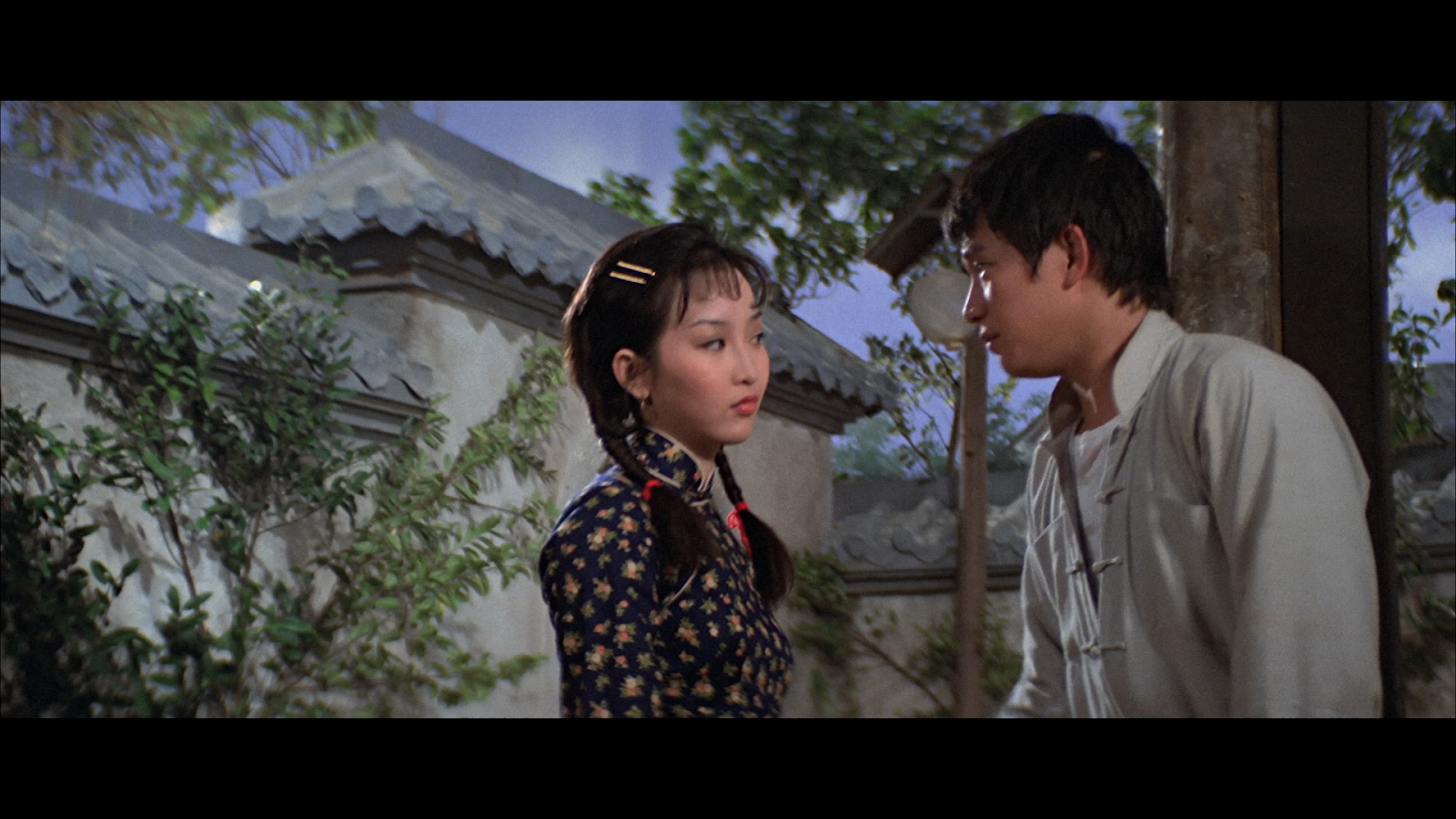
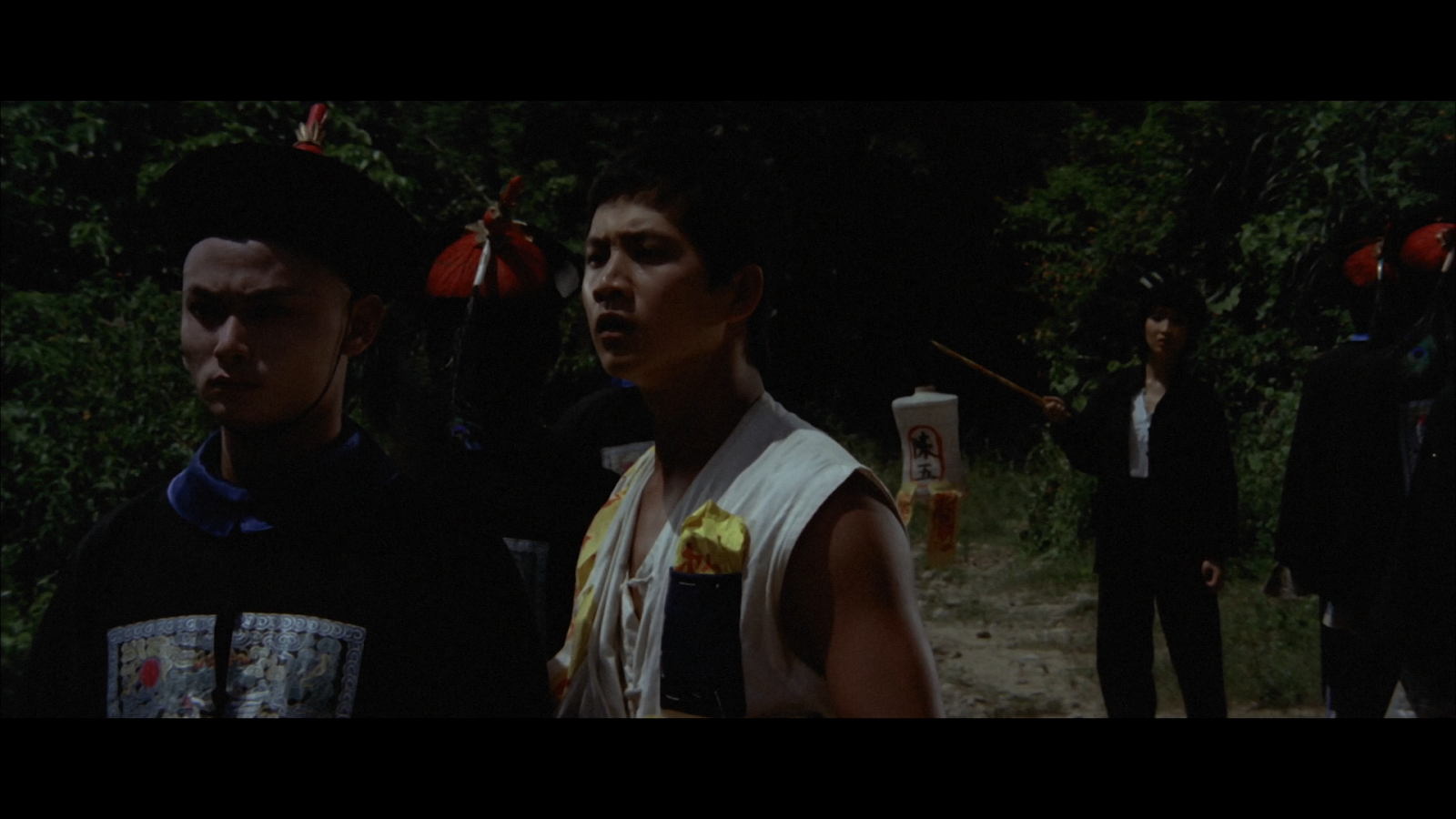
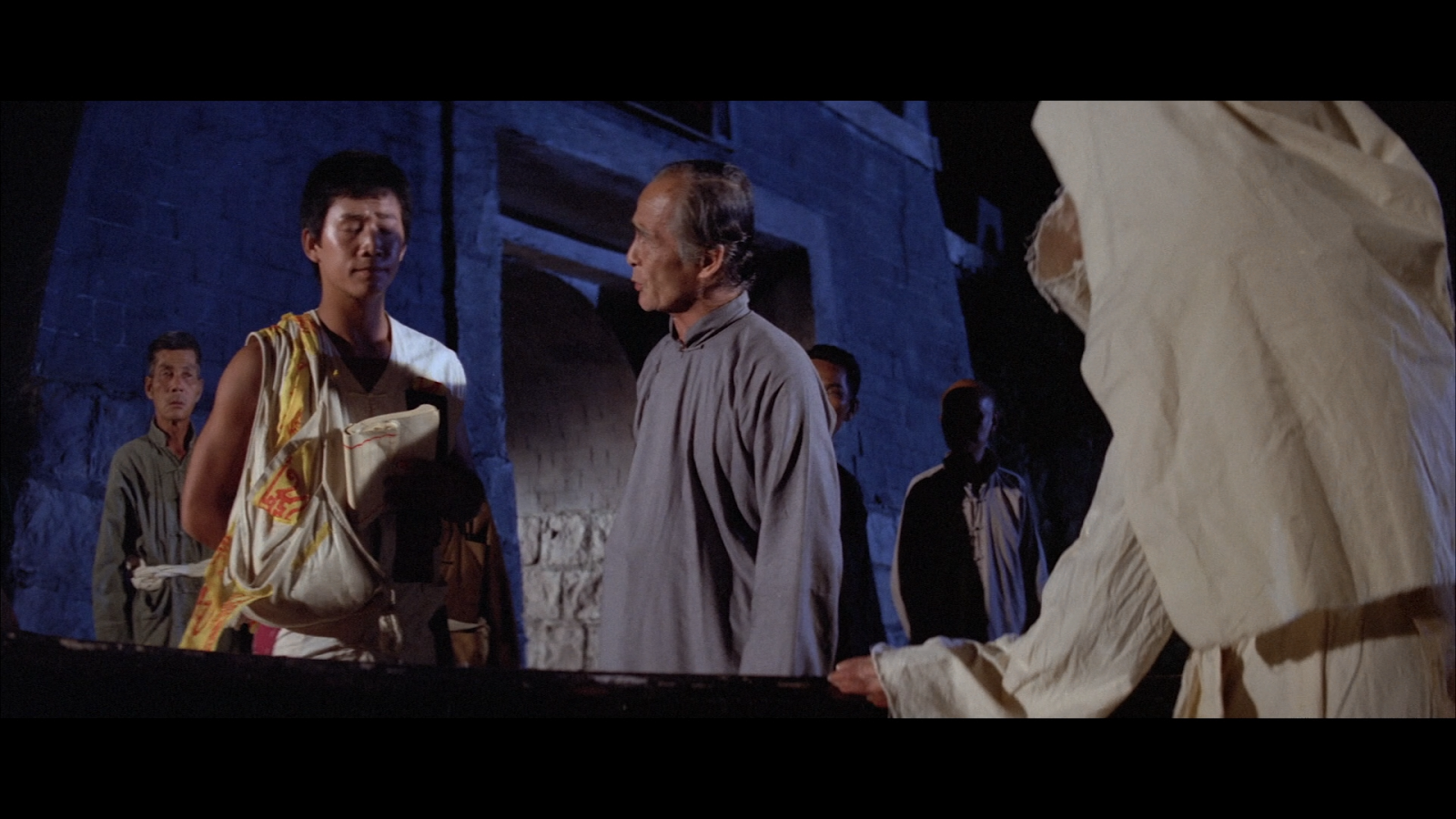
The sources used for all the films are in excellent shape. Colors are nicely saturated, black levels look very good, and details look crisp. It should be noted that the films that were given new transfers for this release all look stronger in these three areas than the films that were sourced from existing HD masters. That said, these transfers are the best these films have looked on home video to date.
Audio: 4/5
All films except The Boxer’s Omen come with three audio options: a DTS-HD mono mix in Mandarin, a DTS-HD mono mix in Cantonese, and a DTS-HD mono mix in English. The Boxer’s Omen comes with two audio options: a DTS-HD mono mix in Mandarin and a DTS-HD mono mix in Cantonese.
All films except The Boxer’s Omen have a removable English subtitle track for the Mandarin language track, a removable subtitle track for the Cantonese language track, and a removable English SDH subtitle track for the English language track. These films: Five Superfighters, Ten Tigers from Kwangtung, My Young Auntie, Mercenaries from Hong Kong, Martial Arts of Shaolin, and The Bare-Footed Kid also have a removable English subtitle track for Mandarin and Cantonese signs and text. The Boxer’s Omen only comes with one removable English subtitle track.
All the audio mixes are in good shape. There are no issues with distortion or background hiss; dialog comes through clearly, everything sounds balanced, and fight sequences sound robust. That said, there are a few instances where one of the three audio tracks sounds more robust than the other two tracks.
Extras:
Extras for The 36th Chamber of Shaolin include an image gallery (62 images-stills/posters/lobby cards/home video art), Hong Kong theatrical trailer #1 (3 minutes 54 seconds, Dolby Digital mono Mandarin with removable English subtitles), Hong Kong theatrical trailer #2 (3 minutes 54 seconds, Dolby Digital mono English, no subtitles), US TV spot (32 seconds, Dolby Digital mono English, no subtitles), German theatrical trailer (2 minutes 36 seconds, Dolby Digital German with removable English subtitles), digital reissue trailer (1 minute 8 seconds, Dolby Digital stereo Mandarin with removable English subtitles), alternate English credits (3 minutes 16 seconds, Dolby Digital mono), the second installment in a three-part documentary produced by Celestial Pictures in 2003 and featuring interviews with Gordon Liu, Lau Kar-leung, Cheng Pei-pei, John Woo, Sammo Hung, Kara Hui, David Chiang and others titled Cinema Hong Kong: Sword Fighting (50 minutes 21 seconds, Dolby Digital stereo English and Cantonese with removable English subtitles), an interview with music historian Lovely Jon titled Tiger Style: The Musical Impact of Martial Arts Cinema (37 minutes 22 seconds, Dolby Digital stereo English, no subtitles), an archival interview with actor Gordon Liu titled Elegant Trails (6 minutes 23 seconds, Dolby Digital stereo Cantonese with removable English subtitles), an archival interview with actor Gordon Liu titled Shaolin: Birthplace of a Hero (16 minutes 2 seconds, Dolby Digital stereo Cantonese with removable English subtitles), an archival interview with actor Gordon Liu (20 minutes 57 seconds, Dolby Digital stereo Cantonese with removable English subtitles), an archival interview with cinematographer Arthur Wong (28 minutes 34 seconds, Dolby Digital stereo English with removable English subtitles), select-scene commentary by film critic and historian Tony Rayns (74 minutes, Dolby Digital stereo English, no subtitles), and an audio commentary with film critic Travis Crawford.
Extras for Return to the 36th Chamber include an image gallery (52 images-stills/posters/lobby cards/home video art), Hong Kong theatrical trailer (3 minutes 21 seconds, Dolby Digital mono Mandarin with removable English subtitles), digital reissue trailer (1 minute 12 seconds, Dolby Digital stereo Mandarin with removable English subtitles), alternate Hong Kong theatrical credits (1 minute 32 seconds, Dolby Digital mono), alternate English language title sequence (1 minute 45 seconds, Dolby Digital mono), an archive featurette produced by Celestial Pictures in 2003 titled Hero on the Scaffolding (14 minutes 40 seconds, Dolby Digital stereo Chinese with removable English subtitles), a French TV documentary from 1980 directed by Maurice Frydland, in which Sir Run Run Shaw gives an all-access tour of the Shaw Brothers backlot (including behind-the-scenes footage from Return to the 36th Chamber) titled Citizen Shaw (57 minutes 42 seconds, Dolby Digital mono French with removable English subtitles), and an archival interview with actor Gordon Liu (14 minutes 50 seconds, Dolby Digital stereo Cantonese with removable English subtitles).
Extras for Disciples of the 36th Chamber include an image gallery (35 images-stills/posters/home video art), Hong Kong theatrical trailer (3 minutes 33 seconds, Dolby Digital mono Mandarin with removable English subtitles), digital reissue trailer (1 minute 7 seconds, Dolby Digital stereo Mandarin with removable English subtitles), and an archival interview with actor Gordon Liu (14 minutes 50 seconds, Dolby Digital stereo Cantonese with removable English subtitles).
Extras for Mad Monkey Kung Fu include an image gallery (57 images-stills/posters/lobby cards/home video art), Hong Kong theatrical trailer (4 minutes 1 second, Dolby Digital mono Mandarin with removable English subtitles), US theatrical trailer (2 minutes 34 seconds, Dolby Digital mono English, no subtitles), digital reissue trailer (1 minute 7 seconds, Dolby Digital stereo Mandarin with removable English subtitles), a featurette on how Shaw Brothers broke America featuring Grady Hendrix and Chris Poggiali, authors of These Fists Break Bricks titled Shaw in the USA (32 minutes 12 seconds, Dolby Digital stereo English, no subtitles), an archival interview with actor Hsiao Hou (39 minutes 59 seconds, Dolby Digital stereo Cantonese with removable English subtitles), an interview with film critic and historian Tony Rayns titled Tony Rayns on Mad Monkey Kung Fu (19 minutes 56 seconds, Dolby Digital stereo English, no subtitles), and an audio commentary with martial arts cinema experts Frank Djeng and Michael Worth.
Extras for Five Superfighters include an image gallery (56 images-stills/posters/lobby cards/home video art), Hong Kong theatrical trailer (3 minutes 26 second, Dolby Digital mono Mandarin with removable English subtitles), UK VHS promo (2 minutes 37 seconds, Dolby Digital mono English, no subtitles), and a featurette titled Shaw in the USA (32 minutes 12 seconds, Dolby Digital stereo English, no subtitles).
Extras include for Invincible Shaolin include an image gallery (52 images-stills/lobby cards/posters/lobby cards/home video art), Hong Kong theatrical trailer #1 (4 minutes 6 second, Dolby Digital mono Mandarin with burnt-in English and Cantonese subtitles), Hong Kong theatrical trailer #2 (4 minutes 6 second, Dolby Digital mono English, no subtitles), digital reissue trailer (1 minute 17 seconds, Dolby Digital stereo Mandarin with removable English subtitles), a visual essay on the Venom Mob written and narrated by author Terrence J. Brady titled Poison Clan Rocks The World (26 minutes 28 seconds, Dolby Digital stereo English, no subtitles), and an archival interview with action director Robert Tai (23 minutes 59 seconds, Dolby Digital stereo Cantonese with removable English subtitles).
Extras include for The Kid with the Golden Arm include an image gallery (29 images-stills/posters/lobby cards/home video art), Hong Kong theatrical trailer (4 minutes 6 second, Dolby Digital mono Mandarin with removable English subtitles, no video only audio), US TV spot (49 seconds, Dolby Digital mono English, no subtitles), digital reissue trailer (1 minute 21 seconds, Dolby Digital stereo Mandarin with removable English subtitles), textless opening credits (2 minutes 3 seconds, Dolby Digital mono English, no subtitles), English opening credits 1 (2 minutes 13 seconds, Dolby Digital mono English, no subtitles), English opening credits 2 (1 minutes 45 seconds, Dolby Digital mono English, no subtitles), a visual essay on the Venom Mob written and narrated by author Terrence J. Brady titled Poison Clan Rocks The World (26 minutes 28 seconds, Dolby Digital stereo English, no subtitles), an archival interview with action director Robert Tai (23 minutes 59 seconds, Dolby Digital stereo Cantonese with removable English subtitles), and an alternate “continuity” cut of The Kid With The Golden Arm, presented via seamless branching (86 minutes 18 seconds, DTS-HD mono Mandarin with removable English subtitles, DTS-HD mono English with removable English SDH subtitles).
Extras include for The Magnificent Ruffians include an image gallery (45 images-stills/posters/lobby cards/home video art), Hong Kong theatrical trailer (3 minutes 37 second, Dolby Digital mono Mandarin with removable English subtitles, no video only audio), German theatrical trailer (2 minutes 58 seconds, Dolby Digital mono German with removable English subtitles), and a video essay on Shaw Brothers’ depiction of Chinese myth and history, written and narrated by Jonathan Clements, author of A Brief History of China titled Rivers and Lakes (22 minutes 34 seconds, Dolby Digital stereo English, no subtitles).
Extras include for Ten Tigers from Kwangtung include an image gallery (45 images-stills/posters/lobby cards/home video art), Hong Kong theatrical trailer #1 (2 minutes 58 second, Dolby Digital mono Cantonese with removable English subtitles), Hong Kong theatrical trailer #2 (2 minutes 58 second, Dolby Digital mono Mandarin with removable English subtitles), US TV spot (28 seconds, Dolby Digital mono English, no subtitles), digital reissue trailer (1 minute 14 seconds, Dolby Digital stereo Mandarin with removable English subtitles), textless title sequence (1 minute 16 seconds, Dolby Digital mono), an archival interview with actor Chin Siu-ho (21 minutes 17 seconds, Dolby Digital stereo Cantonese with removable English subtitles), a video essay on Shaw Brothers’ depiction of Chinese myth and history, written and narrated by Jonathan Clements, author of A Brief History of China titled Rivers and Lakes (22 minutes 34 seconds, Dolby Digital stereo English, no subtitles), and an audio commentary with filmmaker Brandon Bentley.
Extras include for My Young Auntie include an image gallery (30 images-stills/posters/lobby cards/home video art), Hong Kong theatrical trailer (4 minutes 19 second, Dolby Digital mono Mandarin with removable English subtitles), digital reissue trailer (1 minute 9 seconds, Dolby Digital stereo Mandarin with removable English subtitles), alternate opening credits (1 minute 19 seconds, Dolby Digital mono Mandarin with burnt-in English and Cantonese subtitles), an alternate standard-definition VHS version of My Young Auntie (2 hours 34 seconds, Dolby Digital mono English, no subtitles), the final installment in the three-part documentary produced by Celestial Pictures in 2003 titled Cinema Hong Kong: The Beauties of the Shaw Studios (53 minutes 45 seconds, Dolby Digital stereo English and Cantonese with removable English subtitles), an archival interview with actress Kara Hui (29 minutes 20 seconds, Dolby Digital stereo Cantonese with removable English subtitles), and a select-scene commentary by film critic and historian Tony Rayns (46 minutes 43 seconds, Dolby Digital stereo English, no subtitles).
Extras for Mercenaries from Hong Kong include an image gallery (27 images-stills/posters/home video art), Hong Kong theatrical trailer (2 minutes 38 second, Dolby Digital mono Cantonese with removable English subtitles), digital reissue trailer (1 minute 21 seconds, Dolby Digital stereo Mandarin with removable English subtitles), and an archival interview with action director Tong Kai (28 minutes 50 seconds, Dolby Digital stereo Cantonese with removable English subtitles).
Extras for The Boxer's Omen include an image gallery (29 images-stills/posters/home video art), Hong Kong theatrical trailer #1 (2 minutes 47 second, Dolby Digital mono Cantonese with removable English subtitles), Hong Kong theatrical trailer #2 (3 minutes 6 second, Dolby Digital mono Cantonese with removable English subtitles), extended scene (1 minute 57 seconds, Dolby Digital mono), an appreciation of filmmaker Kuei Chih-hung by film critic and historian Tony Rayns (21 minutes 2 seconds, Dolby Digital stereo English, no subtitles), and an audio commentary with film critic Travis Crawford.
Extras for Martial Arts of Shaolin include an image gallery (45 images-stills/posters/home video art), Hong Kong theatrical trailer (2 minutes 57 second, Dolby Digital mono Mandarin with removable English subtitles), Japanese theatrical trailer (1 minute 52 seconds, Dolby Digital mono Japanese with removable English subtitles), digital reissue trailer (1 minute 9 seconds, Dolby Digital stereo Mandarin with removable English subtitles), Shaolin Temple 1 & 2 (6 minutes 58 seconds, Dolby Digital mono Mandarin with burnt in English and Cantonese subtitles), alternate standard-definition version of Martial Arts of Shaolin (97 minutes 32 seconds, Dolby Digital mono Cantonese with removable English subtitles, Dolby Digital mono English, no subtitles), an archival interview with screenwriter Sze Yeung-ping (42 minutes 15 seconds, Dolby Digital stereo Cantonese with removable English subtitles), an interview with film critic and historian Tony Rayns who discusses Martial Arts of Shaolin (29 minutes 40 seconds, Dolby Digital stereo English, no subtitles), and an audio commentary with Jonathan Clements.
Extras for The Bare-Footed Kid include an image gallery (30 images-stills/posters/home video art), Hong Kong theatrical trailer (3 minutes 39 second, Dolby Digital mono Cantonese with removable English subtitles), UK VHS promo (2 minutes 6 seconds, Dolby Digital mono English, no subtitles), digital reissue trailer (1 minute 12 seconds, Dolby Digital stereo Mandarin with removable English subtitles), alternate opening credits (3 minutes 11 seconds, Dolby Digital mono), an interview with film critic and historian Tony Rayns who discusses The Bare-Footed Kid (16 minutes 28 seconds, Dolby Digital stereo English, no subtitles), and an audio commentary with Frank Djeng of the NY Asian Film Festival.
Other extras include two CDs of music from the De Wolfe Music library as heard in ten of the films (The 36th Chamber of Shaolin, Five Superfighters, Invincible Shaolin, The Kid with the Golden Arm, Return to the 36th Chamber, The Magnificent Ruffians, Ten Tigers from Kwangtung, My Young Auntie, Mercenaries from Hong Kong Disciples of the 36th Chamber) and a 60-page book with An Explanatory Note on Names & Languages, an essay titled The Legacy of the Shaw Brothers Studio written by David Desser, cast and crew information, film notes, trivia for each film written by Simon Abrams, name that tune for eleven films, an essay titled Ni Kuang and the Matter of China written by Jonathan Clements, an essay titled Soundtracking the Pugilistic Musical Force written by Lovely Jon, an essay titled Lau Kar-leung and Modern Mythmaking written by David West and information about the restorations/transfers.
Summary:
The 36th Chamber of Shaolin: Shaolin Temple is the source of all kung fu, and the Buddhist headquarters were divided into northern and southern temples. After the death of Bruce Lee, martial arts movies started to lose their appeal with general audiences. The Liu Brothers (Chia-Hui Liu, aka Gordon Liu, and Chia-liang Liu, aka Lau Kar-wing) had built up a following and reputation while making films for the Shaw Brothers. With The 36th Chamber of Shaolin, the Liu Brothers pushed martial arts cinema to the forefront of mainstream cinema, and its reputation as one of the greatest martial arts films ever made is well deserved.
The story may be simple, and the characters may not be the strongest. What makes The 36th Chamber of Shaolin outstanding are its outstanding martial arts and exceptional training sequences, which lift this vengeance-themed kung fu film a notch above the rest. Lau Kar-wing’s direction is sure-handed and inspired, as he infuses elements of real kung fu with grace and humor behind every move. Most of The 36th Chamber of Shaolin's success is due to the brilliant performance from Gordon Liu, who shaved his head for this role and has kept the look ever since.
By the late 1970s, Gordon Liu would prove himself as one of the greatest kung fu stars of the decade, and Warner Brothers, after the death of Bruce Lee, approached Gordon Liu as Lee’s successor. They would change their mind and hire Yul Brynner instead as the lead in The Ultimate Warrior. The action scenes are an important aspect of The 36th Chamber of Shaolin's success, and its focus on the journey of Liu Yu-De to become a fighter is a key element of The 36th Chamber of Shaolin's charm.
In order to complete his training, the San Te character will have to pass through all 35 chambers. Each chamber has been designed to challenge an aspect of human endurance and sharpen his mind. He quickly masters the basics as he moves on to actual kung fu and weapons training. With his completion of this journey, he created the 36th chamber. Ultimately, The 36th Chamber of Shaolin features some of the most powerful images of kung fu training ever committed to film. The film also marked the beginning of a remarkable string of hits that made Gordon Liu a star worldwide.
Return to the 36th Chamber: Despite the fact that Return of the 36th Chamber is very similar to its predecessor, The 36th Chamber of Shaolin, it is a sequel in name only.
Returning for this sequel are director Lau Kar-wing and its lead, Gordon Liu, in a different role, albeit one that allows him to once again portray Shaolin monk San Te. However, anyone expecting a film in the vein of The 36th Chamber of Shaolin should be aware that Return of the 36th Chamber is on the opposite end of the tone spectrum. Return of the 36th Chambers is a film that relies heavily on humor; some moments are slapstick comedy, which makes great use of the martial arts on display.
The narrative revolves around Chu Jen-chieh, a con man who impersonates a well-known Shaolin monk named San Te, albeit for good reasons and not for personal gain. When he is exposed as a fraudster, he then tries to gain entrance into the Shaolin Temple. From there, he finally gets the monks to agree to let him enter the temple and learn kung fu.
Once again, Gordon Liu delivers a fantastic performance in the role of Chu Jen-chieh, a character who is always telling lies like the boy who cried wolf, and even when he is telling the truth, no one believes him. The rest of the cast are very good in their roles, especially Wang Lung-wei (The Eight Diagram Pole Fighter) in the role of a ruthless factory owner who is exploiting the workers at the behest of the Manchurians.
From a production standpoint, there is not an area where Return to the 36th Chamber disappoints. The briskly paced narrative ensures there is never a dull moment. The fight scenes are beautifully executed, as bamboo and step-stoles are used as weapons instead of your usual martial arts weapons. Standout moments include a scene where Chou Jen Chich learns kung fu by building a scaffold and a scene where Chou Jen Chich throws a rock down a well. He then proceeds to wash himself with the water from the splash created by the falling rock. Ultimately, Return of the 36th Chambers is a must-see martial arts classic that is on par with its predecessor, The 36th Chamber of Shaolin.
Disciples of the 36th Chamber: Is a third time a charm? Director Lau Kar-wing and its lead, Gordon Liu, return for Disciples of the 36th Chamber. Their third film in a series of films that revolve around a character named San Te. That said, Disciples of the 36th Chamber is more of a direct sequel to The 36th Chamber of Shaolin than its predecessor, Return of the 36th Chambers.
The narrative revolves around a daydreamer named Fong Shiyu who is always getting into trouble. A moment of indiscretion forces Fong Shiyu to seek refuge in the Shaolin Temple. Unfortunately, once again he returns to his mischievous ways, which leads to his being expelled from the Shaolin Temple.
Gordon Liu reprises the role of San Te. This time around, San Te is more of a mentor than the focus of the story. And despite being a secondary role, his character is given several moments to shine. Hsiao Ho (He Has Nothing But Kung Fu) is cast in the role of the protagonist, Fong Shiyu. He delivers a solid performance that perfectly captures his character's childish behavior.
Disciples of the 36th Chamber is a film that exploits all of its resources. Though the narrative is the weakest of the three 36th Chamber films, the arc of the story keeps things moving and interesting until the very end. Of course, the fight and training sequences are the Disciples of the 36th Chamber’s greatest assets. The standout moment is a training sequence in which the Shaolin disciples run up a step wall that defies gravity as the two leads, Fong Shiyu and San Te, at one point square off against each other. Ultimately, Disciples of the 36th Chamber's positives far outweigh its negatives. If you're a fan of classic martial arts cinema, then you are sure to enjoy Disciples of the 36th Chambers.
Mad Monkey Kung Fu: Though countless martial arts films from the 1970s were built around a unique fighting style that was often derived from animals or insects, Very few of these can match the awe-inspiring acrobatics on display in Mad Monkey Kung Fu. And, while Mad Monkey Kung Fu does an excellent job of setting the stage, who is everyone and what their motivations are? There is no doubt that its action set pieces are the glue that holds everything together.
The narrative is nothing more than your standard revenge-themed martial arts extravaganza, in which a fallen martial artist trains a pupil as the means to exact his vengeance. The way in which said story evolves is done in such a tongue-in-cheek way that there is never a dull or wasted moment. In fact, it would be hard to imagine this film working as well as it does if the more comedic aspects of this production were toned down or eliminated all together.
Mad Monkey Kung Fu was directed by Lau Kar-wing, a filmmaker whose films often employ humor. Some of his more notable comedy/martial arts hybrids include Return to the 36th Chamber, My Young Auntie, and The Legend of the Drunken Master. He also appears in the film as Chen, a Peking Opera performer who is left crippled.
Not to be overlooked are the performances of the rest of the cast, which includes Lieh Lo (King Boxer) as the crime boss responsible for Chen's paralysis, Kara Hui (My Young Auntie) as Chen's sister, and this film's standout performance comes from Hou Hsiao (The Martial Club) as Monkey, the young man who becomes Chen's more than apt pupil.
When it comes to fight sequences, they deliver and then some. The monkey fighting kung fu style is inventive and, at times, jaw-dropping as actors move their bodies in unbelievable ways. Furthermore, the lighthearted score complements the fighting style of the monkeys. And the training sequences are once again a highlight. Ultimately, Mad Monkey Kung Fu is a fast-paced film that has a satisfying mix of action and offbeat humor.
Five Superfighters: The narrative revolves around three martial arts students who seek out new teachers after they are badly beaten up in front of them. Needing to improve their fighting skills, they search for new teachers. And after they enhance their martial arts, they join forces against them, including wandering strangers who humiliate them in front of their teacher.
Five Superfighters is an action-heavy film whose non-fight scenes are just a means to connect said action set pieces. The revenge premise retreads all too familiar ground, especially for anyone who is well versed in martial arts cinema. That said, the action set pieces are strong enough that any narrative shortcomings are easy to overlook.
Though there are not any names in the cast that are recognizable. The performances are actually very good, as they exceed expectations, especially those of Wei-Wei Huang (the Iron Chain Assassin), Jamie Luk (the Crippled Avengers), and Hui-Huang Lin (the Vengeful Beauty) in the roles of the three masters who train the three disgraced students. Another performance of note is Kwan Fung's (Five Element Ninjas) in the role of a stranger who searches for martial artists and corrects their fighting skills.
Another strength of the Five Superfighters is the three teachers' unique fighting skills. One teacher is a fisherman whose expertise is pole fighting; another teacher is a rice farmer who uses her job to strengthen legs for her expertise in leg fighting; and the other teacher is a drunk whose expertise is drunken martial arts. Ultimately, Five Superfighters is a well-made martial arts film that fans of 1970s martial arts cinema are sure to enjoy.
Invincible Shaolin: The narrative revolves around three north Shaolin martial arts teachers who are unknowingly being used by a Manchurian general trying to start a war between north and south Shaolin.
Invincible Shaolin is one of nineteen films that are connected to a collective group of actors named the Venom Mob. Besides actors, the other main contributor to these films is director Chang Cheh, who directed eighteen of the nineteen films.
Content-wise, Invincible Shaolin has many of the themes that dominate Chang Cheh’s filmography. Most notably, loyalty, betrayal, and revenge And once again, Chang Cheh’s direction is solid, especially when it comes to the action set pieces. With the brutal, carnage-filled finale, the most memorable action set piece This sequence is masterfully executed as it cuts back and forth from the present to the past.
The cast is all very good in their respective roles, especially Wang Lung-wei's (Five Deadly Venoms) portrayal of a ruthless Manchurian general whose fighting skills are deadly. Of course, the Venom Mob actors are the main attraction, and when it comes to the fight sequences, they do not disappoint.
From its opening moments, Invincible Shaolin establishes a relentless tone that builds to its exceptional finale. And though there is an ample amount of time devoted to the action set pieces, that does not mean that the narrative is not fully fleshed out. Another strength of Invincible Shaolin are its training sequences and how they show the growth of each fighter. Ultimately, Invincible Shaolin is a textbook example of 1970s classic martial arts cinema.
The Kid with the Golden Arm: The narrative revolves around a group of skilled martial artists transporting gold on treacherous terrain that is inhabited by some of the deadliest martial artists.
The Kid with the Golden Arm is one of nineteen films that are connected to a collective group of actors named the Venom Mob. Besides actors, the other main contributor to these films is director Chang Cheh, who directed eighteen of the nineteen films.
Content-wise, The Kid with the Golden Arm is filled with themes synonymous with the cinema of Chang Cheh. And though the narrative is basic, the journey is filled with ambushes and betrayals. There is never a dull moment as the narrative builds to an exceptional finale where the main villain is blinded and forced to adapt.
The cast is all very good in their respective roles, especially Phillip Chung-Fung Kwok (Story of Ricky) in the role of sheriff Hai To, an observant drunk who anticipates the assassins' every move. Another performance of note is Lo Meng (Ebola Syndrome) in the role of the title character, Golden Arm, an invincible fighter who has no apparent weak points.
From a production standpoint, there is not an area where The Kid with the Golden Arm does not excel. The fight scenes are at times gory and always inventive. Another strength is how each of the four villains is given their own specialty. Ultimately, The Kid with the Golden Arm is a fast-paced martial arts film that perfectly blends action and high drama.
The Magnificent Ruffians: The narrative revolves around a sadistic boss of a town who lures fighters into challenging him so he can use his deadly golden sword technique.
The Magnificent Ruffians is one of nineteen films that are connected to a collective group of actors named the Venom Mob. Besides actors, the other main contributor to these films is director Chang Cheh, who directed eighteen of the nineteen films.
Content-wise, The Magnificent Ruffians has all the elements that are synonymous with the Venom Mob films. The main themes explored were deception and revenge. Chang Cheh’s steady direction keeps the narrative moving forward. And when it comes to the action set pieces, they do not disappoint, especially in the spectacular finale, where two fighters team up against the golden sword technique.
The performances are all very good, especially Lu Feng (The Flag of Iron) in the role of Yuan Ying Fei, a skilled fighter who uses the golden sword technique. He delivers a performance that perfectly captures his character's cruelty and passion for bloodletting.
From a production standpoint, The Magnificent Ruffians is a film that maximizes its resources. Though the fight scenes are brutal, there is a surprisingly good amount of humor throughout. Notably, the four characters who dine and dash because they can't afford to pay for their meals. Also, The Magnificent Ruffians features a music cue from Taxi Driver that is instantly recognizable. Ultimately, The Magnificent Ruffians is a satisfying mix of action and humor that fans of 1970s martial arts cinema are sure to enjoy.
Ten Tigers from Kwangtung: The narrative revolves around assassins who track down and kill disciples of the Ten Tigers.
Ten Tigers from Kwangtung is one of nineteen films that are connected to a collective group of actors named the Venom Mob. Besides actors, the other main contributor to these films is director Chang Cheh, who directed eighteen of the nineteen films.
Ten Tigers from Kwangtung opens with a fight sequence that ends in a character's death, which firmly establishes the tone for the events that follow. From there, most of the narrative is told via a series of flashbacks that lay the foundation for the events that opened Ten Tigers from Kwangtung.
The cast is all very good in their roles, especially The Venom Mob. Other performances of note are Ti Lung (A Better Tomorrow) in the role of Li Jen Chiao, an ex-Shaolin warrior who remains loyal, and Alexander Fu Sheng (Legendary Weapons of China) in the role of Li Jen Chiao’s brother.
From a production standpoint, Ten Tigers from Kwangtung is a film where everything perfectly falls into place. The premise is well-executed, the narrative is a good balance of exposition and action, and an exceptional finale provides a very satisfying conclusion to the events that preceded. Though the fight scenes are not as memorable as those in other Venom Mob films, they are not lacking when it comes to brutality. Ultimately, Ten Tigers from Kwangtung is one of the high points of Chang Cheh’s filmography.
My Young Auntie: The premise is that a young woman named Cheng Tai-Nan, who married her master, is suddenly the family’s new matriarch after his death. with most of the humor revolving around the absurdity of Cheng Tai-Nan being the matriarch despite her young age. Needless to say, the narrative, which is not the most logical, provides plenty of laughs.
My Young Auntie is a martial arts comedy directed by the legendary Lau Kar-wing, who has directed many bonafide martial arts classics like Legendary Weapons of China, Eight Diagram Pole Fighter, and Drunken Master II. Besides directing the wall-to-wall action and side-splitting comedy, Lau Kar-wing also plays an important part in the film as Yu Ching-Chuen, the nephew who inherits his uncles’ estate. Lau Kar-wing also gets several chances to show off his exemplary martial arts skills, with his standout moment coming during the final showdown.
Kara Hui (Legendary Weapons of China) is in the cast in the role of Cheng Tai-Nan. She delivers a pitch-perfect performance that captures the naivety of her character, which also makes her appear more vulnerable than she is. The most memorable moment in the film is when Cheng Tai-Nan buys a modern dress, and when she is forced to fight off all her male admirers, she is also forced to try to cover up her exposed legs, which are hardly covered by her new dress. Hong Kong has seen its fair share of martial arts women fighters, and Kara Hui in My Young Auntie proves that she can more than handle herself when it comes to action.
Gordon Liu, who appears in some outrageous costumes, plays a secondary role. He spends most of his screen time hamming it up, and when he does fight, it is his usual high-quality asskicking kung fu. And Hou Hsiao (Martial Club) is in the cast in the role of "Charlie" Yu Tao, the obnoxious son of her nephew. He has several great moments in the film, like when he and his father are trying to hang a picture. Instead of paying attention to his father, he leers at his aunt, who is changing in the other room. My only criticism of this film is that Yu Tao, who is portrayed as a spoiled brat, acts as if he is still in elementary school. This part of his persona clashes with the not-so-convincing macho bravado that he tries to wear with little or no effect.
Though the narrative is a mess at times as it takes from several different sources and genres to make one cohesive storyline that somehow makes sense, at least the action scenes are all inventive and well done. And when it comes to humor, My Young Auntie never misses the mark. Ultimately, My Young Auntie is a highly entertaining mix of martial arts and comedy.
Mercenaries from Hong Kong: The narrative revolves around mercenaries hired by a woman who wants them to retrieve the assassin who murdered her father. In order to complete their mission, they have to go to Cambodia, where he currently resides in a compound that is protected by rebel fighters.
Mercenaries from Hong Kong was directed by Wong Jing, a prolific director and producer. His notable film credits include God of the Gamblers, Royal Tramp, High Risk, Naked Killer, and A Chinese Torture Chamber Story.
Content-wise, Mercenaries from Hong Kong has elements that are synonymous with other mercenary-themed films that rose to prominence in the 1980s. That said, though there are some hand-to-hand fights, Mercenaries from Hong Kong is more of an action film than a martial arts film. When it comes to the kills, they are brutal and gory, and a variety of weapons are employed throughout, including a bazooka in the finale.
Though the cast more than fulfills their roles. The performances range from good to great. Ti Lung (City War) in the role of Luo Li, the leader of the mercenaries, falls into the latter. The scene that introduces this character is one of the most memorable moments. He gives the man who raped, drugged, and killed his niece a taste of his own medicine by forcing him to overdose. Ultimately, fans of 1980s bombastic action films will enjoy Mercenaries from Hong Kong.
The Boxer's Omen: The narrative revolves around a Hong Kong gangster who goes to Thailand to avenge his brother, who was left crippled in a boxing match. Once there, he becomes entangled in a fight between Buddhism and black magic.
The Boxer’s Omen was directed by Kuei Chih-Hung, whose other notable films include The Bamboo House of Dolls, The Killer Snakes, Corpse Mania, and Bewitched.
Content-wise, The Boxer’s Omen is a satisfying mix of supernatural and exploitation cinema. The brutal fight sequences are gory and, at times, grotesque. There is an ample amount of gratuitous flesh on display. And the practical special effects, which look outrageous, hold up really well.
The cast is all fantastic in their roles, especially Phillip Ko (On the Run) in the role of Chan Hung, a Hong Kong gangster who is a major player in the world of drugs. Another performance of note is Bolo Yeung, in the role of a Thai boxer who crippled the protagonist's brother. He does what he does best, crippling his opponents with his bone-crushing blows.
Though Hong Kong cinema, and the Shaw Brothers in particular, are best known for their martial arts films, every now and then, there would be a cinematic oddity like The Boxer’s Omen, a truly unique cinematic experience that is unlike anything else. Needless to say, The Boxer’s Omen has plenty of WTF moments. Ultimately, describing why The Boxer’s Omen is such an amazing film is not enough; it is a film that has to be seen to be believed.
Martial Arts of Shaolin: Long before Jet Li achieved stardom with the Once Upon a Time in China films, he starred in a trilogy of Shaolin films: Shaolin Temple (1982), Kids from Shadolin, and Martial Arts of Shaolin, with the latter of these three being the standout. Jet Li's performance foreshadows his future as an actor. That said, at this point in his career, it is in the action sequences where he shines brightest, while the more dramatic moments are not as strong.
Shaolin martial arts Lau Kar-wing, whose filmography includes The 36th Chamber of Shaolin and Drunken Master II, is arguably one of the best among those who make martial arts films. His direction is solid. The fight scenes are well-executed, and some of them even serve as effective comedic relief. That said, the training sequences are the main attraction.
The narrative takes its time building up the relationships between the lead characters. And though it is a story about revenge, there is a love story subplot between the protagonist, Lin Zhi-ming, and Si-ma Yan, a character who shares his desire for revenge. There is a third character, Chao Wei, who completes what evolves into a love triangle.
Though the performances are suitable for the story at hand. All of the actors shine brightest when it comes to action sequences or moments of well-placed humor. The most notable scene is one in which Lin Zhi-ming, disguised as Bo Peep, Si-ma Yan, and Chao Wei attempt to cross the border. The standout action sequence is the finale, where Lin Zhi-ming and Chao Wei ambush a body on a river by placing bamboo boats in its path. Ultimately, Shaolin's Martial Arts mixes up its various influences into a cohesive piece that contains first-rate action with high drama.
The Bare-Footed Kid: The narrative revolves around a penniless orphan who uses his extraordinary fighting skills to climb the social ladder.
The Bare-Footed Kid was directed by Johnnie To, whose other notable films include The Heroic Trio, Breaking News, Throw Down, Exiled, and Election. The Bare-Footed Kid’s cinematographer was Wong Wing-Hang, whose other notable films include A Better Tomorrow, A Better Tomorrow II, The Killer, A Bullet in the Head, and Hard Boiled.
Though the premise covers familiar ground, Johnnie To’s ensures that there is rarely a dull moment. The narrative moves along briskly, and the high-flying fight sequences will not disappoint.
The Bare-Footed Kid's strongest asset is its solid cast. The standout performance is Aaron Kwok (The Storm Riders) in the role of Kuan, a penniless orphan with remarkable martial arts skills. He does a great job conveying his character's evolution from his country roots to being corrupted by money and power. Other characters of note are Ti Lung (Black Magic) in the role of Tuen Ching-wan, Kuan’s mentor, and Maggie Cheung (Police Story) in the role of Pak Siu-kwan, a woman who owns a dye factory.
The Bare-Footed Kid offers a glimpse into Johnnie To’s origins as a filmmaker. And though The Bare-Footed Kid feels more like a director-for-hire film than the films he would direct from the late 1990s to the present, the result is actually a very good film that is always entertaining. Ultimately, The Bare-Footed Kid is a well-made martial arts film that does a great job bridging modern martial arts cinema with classic martial arts cinema.
Arrow Video’s Shawscope Volume Two box set is in line with its predecessor. It comes in a sturdy box, each film is given solid audio and video presentations, and there is a wealth of archival and newly created extras that provide insight into the films and those who made them. That said, Arrow Video’s Shawscope Volume Two box set is an exceptional release, and one would be hard pressed to name a better release than Shawscope Volume Two from 2022. Highly recommended.
Written by Michael Den Boer