Two Boxes: Televised Terror in Franco's Spain: Limited Edition – Transmission Video Distribution (Blu-ray)

Release Dates: Spain, 1972 (La cabina), Spain, 1974 (El televisor)
Directors: Antonio Mercero (La cabina), Narciso Ibáñez Serrador (El televisor)
Cast: José Luis López Vázquez, Agustín González, Goyo Lebrero, Tito García (La cabina), Narciso Ibáñez Menta, María Fernanda D'Ocón, Kiti Mánver, José Miguel Aguado, Rafael Navarro, Sergio Doré, Estanis González (El televisor)
Release Date: August 3rd, 2026
Approximate Running Times: 35 Minutes 54 Seconds (La cabina), 67 Minutes 57 Seconds (El televisor)
Aspect Ratio: 1.33:1 Aspect Ratio / 1080 Progressive / MPEG-4 AVC (Both Films)
Rating: 12 (UK)
Sound: LPCM Mono Spanish (Both Films)
Subtitles: English (Both Films)
Region Coding: Region Free
Retail Price: £19.99 (UK)
"Spain in the early 1970s was a country in transition, with increasing economic prosperity and the expectations of a growing middle class in direct conflict with the dying Francoist regime, where state surveillance, media censorship, and social control were still the norm. Inspired by mystery-horror anthology series such as Alfred Hitchcock Presents and The Twilight Zone, this unique period in history is depicted with terrifying clarity and dark humor in these two infamous television films: La cabina and El televisor.
In Antonio Mercero’s La cabina, a group of officials install a telephone box outside a block of flats. After a man enters to make a phone call, he finds himself unable to leave, attracting the attention of fascinated locals as he grows increasingly desperate to escape. A sensation upon release, La cabina also developed a huge cult following in the UK after regularly screening on late-night TV.
In Narcisco Ibáñez Serrandor’s El televisor, a man living a dreary suburban life has a simple dream: to possess his own television. When he finally gets his wish, the dream soon becomes a dangerous, all-consuming obsession. Originally a special episode of Serrandor’s hugely popular series Tales to Keep You Awake, El televisor’s escalating dread and shocking conclusion still retains its power to shock over 50 years later." - synopsis provided by the distributor
Video: 4.25/5 (La cabina), 3.75/5 (El televisor)
Here’s the information provided about the transfer, "La cabina was supplied to Radiance Films as a high-definition digital file by Televisión Española.
El televisor was supplied to Radiance Films as a high-definition digital file by Televisión Española. Additional clean-up was performed by Radiance Films."
La cabina and El televisor come on a 50 GB dual layer Blu-ray.
Disc Size: 43.1 GB
Feature: 9.6 GB (La cabina), 18.3 GB (El televisor)
La cabina is in better shape than El televisor, which exhibits more noticeable source-related debris. Flesh tones and colors look correct, image clarity and black levels are strong, and there are no issues with compression.
Audio: 4/5 (La cabina - LPCM Mono Spanish, El televisor - LPCM Mono Spanish)
Each film comes with one audio option, a LPCM mono mix in Spanish with removable English subtitles. Both tracks sound clean, clear, and balanced.
Extras:
Extras for this release include an interview with Spanish film expert Antonio Lazaro-Reboll on horror in Francoist Spain (37 minutes 34 seconds, Dolby Digital stereo English, no subtitles), an archival interview with co-screenwriter of La cabina Jose Luis Garci (18 minutes 19 seconds, Dolby Digital stereo Spanish with removable English subtitles), an archival La cabina location featurette with Antonio Mercero Santos (13 minutes 6 seconds, Dolby Digital stereo Spanish with removable English subtitles), an archival press conference from 1999 with director Narciso Ibanez Serrandor promoting El televisor (6 minutes 47 seconds, Dolby Digital stereo Spanish with removable English subtitles), an audio commentary with writers and filmmakers Reece Shearsmith and Steve Pemberton for La cabina, an audio commentary with film critics and horror experts Jonathan Rigby and Kevin Lyons for El televisor, a removable OBI strip leaving packaging free of certificates and markings, an O-card slipcover (limited to 5,000 copies), a 36-page booklet (limited to 5,000 copies) with cast & crew information, an essay titled Two Boxes: Televised Terror in Franco's Spain written by Alex Mendibil, an essay titled Fear of the Box: The Late Night Legend of La cabina on British TV written by Paul Martinovic, and information about the transfer.
Summary:
La cabina: A man goes inside a recently installed telephone box; when he tries to make a call, the phone does not work. When he tries to leave the telephone box, it has become sealed and impenetrable. From there, a crowd gathers and quickly grows in size, and any attempt to free is unsuccessful.
For a film that only clocks in at 36 minutes, La cabina conveys so much in regard to social commentary and subtext. Themes explored bureaucratic inefficiency, psychological distancing, and isolation. La cabina is a film overflowing with psychological horror, which is mostly conveyed through the use of black humor. That said, what is happening to the protagonist is no laughing matter.
While there are several people who try to help the protagonist and an abundance of spectators enjoying his plight, there is really only one actor who stands out: José Luis López Vázquez in the role of the protagonist. He delivers a remarkable performance that perfectly conveys his character's fright and hopelessness. Confined in a small space, so much of his performance relies on his body language.
The most striking aspect of La Cabina is the visuals and how they constantly come up with interesting compositions despite its confined space. Another area where the visuals excel is their ability to create and sustain a forbidding mood. The narrative masterfully builds tension, culminating in the revelation of the protagonist's fate. Its finale is an exclamation mark on the dangers of institutional inefficiency with the cycle of events starting over. Ultimately, La cabina is a surrealist nightmare that explores universal themes that are all too real.
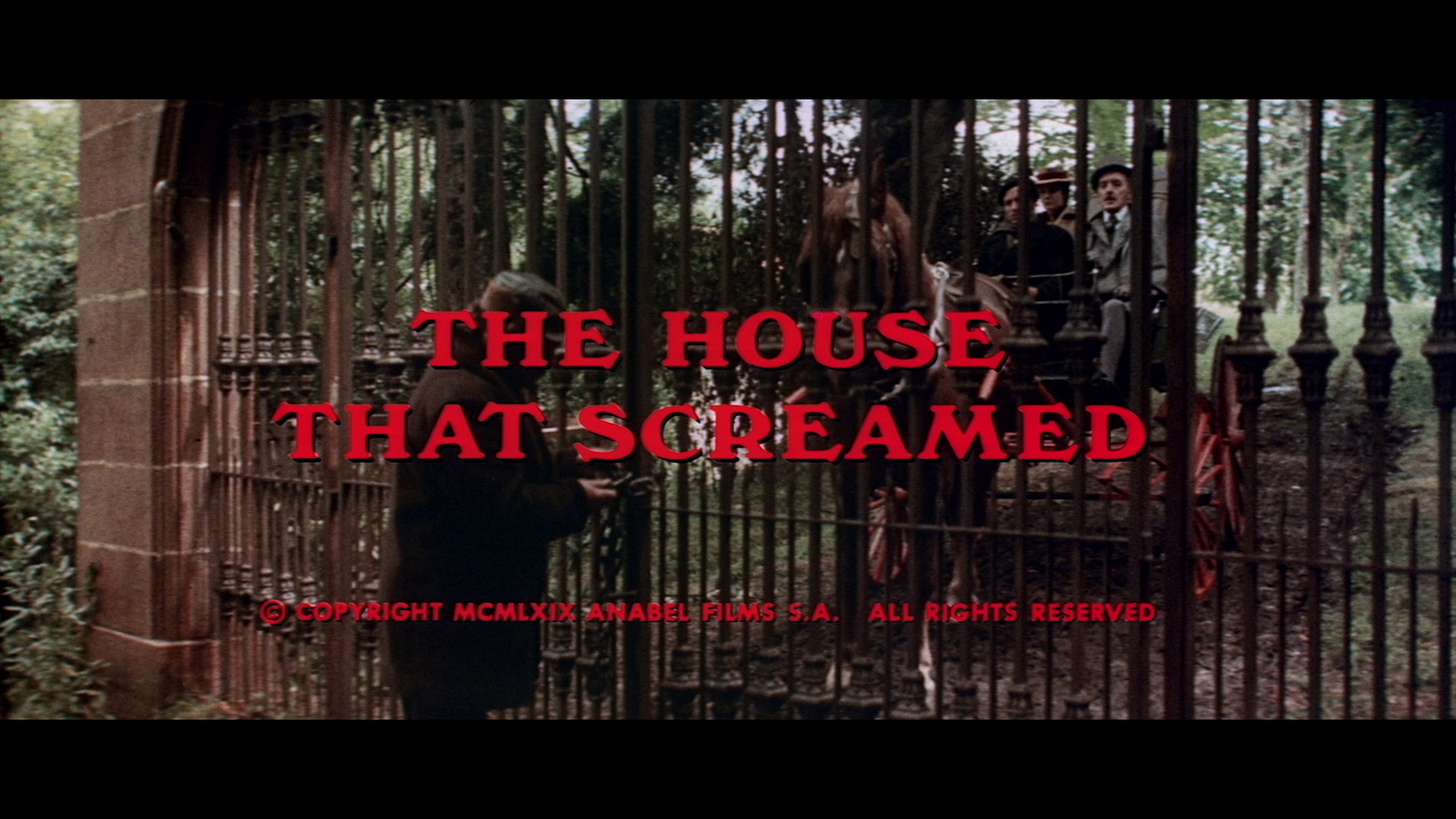
El televisor: Narciso Ibáñez Serrador directed El televisor. He’s most known for The House That Screamed, Who Can Kill a Child, and Twilight Zone-like television series Historias para no dormir.
A man who has spent his life doing what is right, always going to work, and providing for his family finally has enough money to buy the television he’s longed for. What starts off as a moment of escapism turns into a waking nightmare when he’s unable to distinguish between reality and fantasy.
El Televisor is best described as a psychological melodrama with horror and fantasy elements. A common trend in early 1970s Spanish cinema is to use horror elements to convey social commentary, because any other genre would have censored said content. The most notable themes explored in El Televisor are consumerism and media consumption. While the themes being explored veer into dark territories, they are laced with a subversive humor.
All around, the cast are outstanding in their roles, especially Narciso Ibáñez Menta (the director’s father) in the role of the protagonist, a bank employee named Enrique. He delivers an utterly convincing performance of a man who loses sight of what is really important and gets overwhelmed by his obsession. María Fernanda D'Ocón gives an equally compelling performance in the role of Susana, Enrique’s wife.
The visuals, while not overly stylish, mostly let the performances be the focal point. The narrative does an excellent job drawing you in, and from there it effectively builds upon a series of tense moments that culminate with a carnage-filled finale. Another strength of El Televisor is how well it taps into elements that are universal and highlight their sinister undertones. Ultimately, El Televisor is an extraordinary film that’s overflowing with imagination and foreboding atmosphere.
The best part of cinema is venturing outside of your comfort zone and discovering something unexpected. While I am familiar with 1970s Spanish cinema, La cabina and El televisor were two genuine surprises. That said, Transmission Video Distribution’s Two Boxes: Televised Terror in Franco's Spain is a must-have purchase for fans of 1970s Spanish cinema, and I regard it as one of 2026’s best home media releases. Highly recommended.


Written by Michael Den Boer