Monday, April 21, 2025

Murderock – Vinegar Syndrome (UHD/Blu-ray Combo)

Theatrical Release Date: Italy, 1984
Director: Lucio Fulci
Writers: Gianfranco Clerici, Vincenzo Mannino, Roberto Gianviti, Lucio Fulci
Cast: Olga Karlatos, Ray Lovelock, Claudio Cassinelli, Cosimo Cinieri

Release Date: April 15th, 2025
Approximate Running Time: 94 Minutes 14 Seconds
Aspect Ratio: 1.66:1 Widescreen / 2160 Progressive / HEVC / H.265 / Dolby Vision HDR10
Rating: NR
Sound: DTS-HD Mono Italian, DTS-HD Mono English
Subtitles: English, English SDH
Region Coding: Region Free
Retail Price: $59.98

"Candice Norman operates the hottest dance academy in town, with hoards of hopefuls dying to be admitted, maybe literally. Shortly after a trio of new students are accepted into Candice’s tutelage, a young female pupil is found murdered on campus, stabbed through the heart with a long pin. With the backbiting staff and students alike all rendered possible suspects, Candice is also plagued by haunting dreams involving a sinister man. When Candice spots this man's face on a billboard, she decides to track him down, while yet another rising dance starlet winds up with a punctured heart. Is this handsome stranger as dangerous as the man in her dreams? Could a bloodthirsty maniac from outside the school be preying upon the dancers? Or has the intense competition between dancers and staff turned one of them into a depraved killer? And how does Candice herself factor into this shocking mystery?" - synopsis provided by the distributor

Video: 5/5 (4K UHD, Blu-ray)

Here’s the information provided about this release's transfer, "Newly scanned & restored in 4K from its 35mm original camera negative."

Murderock comes on a 66 GB dual layer 4K UHD.

Disc Size: 61.5 GB

Feature: 60.9 GB

The source looks excellent; colors are nicely saturated, image clarity, contrast, black levels, and compression are solid, and the image retains an organic look.

Murderock comes on a 50 GB dual layer Blu-ray.

Disc Size: 46.1 GB

Feature: 26.7 GB

This Blu-ray uses the same master that is used for the 4K UHD disc.

Audio: 4.5/5 (DTS-HD Mono Italian), 4.25/5 (DTS-HD Mono English)

This release comes with two audio options, a DTS-HD mono mix in Italian and a DTS-HD mono mix in English. Both audio tracks sound clean, clear, and balanced. Range-wise, ambient sounds and the score are well-presented. That said, the Italian language track sounds more robust than the English language track. Included are removable English subtitles for the Italian language track and removable English SDH for the English language track.

Extras:

Extras on the 4K UHD disc include an audio commentary with film historian Troy Howarth.

Extras on the Blu-ray disc include a theatrical trailer (2 minutes 27 seconds, Dolby Digital stereo English, no subtitles), an audio interview with director Lucio Fulci (16 minutes 24 seconds, Dolby Digital stereo Italian with removable English subtitles), an audio interview with actress Geretta Geretta (25 minutes 11 seconds, Dolby Digital stereo English, no subtitles), an interview with actress Silvia Collatina titled Child's Play (24 minutes 29 seconds, Dolby Digital stereo Italian with removable English subtitles), an interview with Silvia Collatina titled Hellfant Prodige (9 minutes 35 seconds, Dolby Digital stereo English, no subtitles), an interview with make-up artist Franco Casagni titled A Pin in the Heart (8 minutes 15 seconds, Dolby Digital stereo Italian with removable English subtitles), an interview with music historian Pierpaolo De Sanctis titled Murder Prog (32 minutes 10 seconds, Dolby Digital stereo Italian with removable English subtitles), an interview with producer Augusto Caminito and film historian Eugenio Ercolani titled The Murder Instigator (17 minutes 34 seconds, Dolby Digital stereo Italian with removable English subtitles), an interview with Eugenio Ercolani titled Augusto’s Empire (32 minutes, Dolby Digital stereo English, no subtitles), an audio interview with screenwriter Gianfranco Clerici titled A Pen in the Dark (13 minutes 56 seconds, Dolby Digital stereo Italian with removable English subtitles), an interview with cinematographer Giuseppe Pinori titled Lightning Murder (26 minutes 33 seconds, Dolby Digital stereo Italian with removable English subtitles), an interview with actor Al Cliver titled Lucio’s Pet (13 minutes 33 seconds, Dolby Digital stereo Italian with removable English subtitles), an interview with actor Robert Gligorov titled Ballet in Blood (27 minutes 49 seconds, Dolby Digital stereo Italian with removable English subtitles), and an audio commentary with Troy Howarth.

Other extras include reversible cover art, a spot gloss hard slipcase + slipcover combo (limited to 8,000 units), and a 40-page perfect bound book (limited to 8,000 units) with an essay titled A Danse Macabre in Leg Warmers written by Justin Kerswell, an essay titled This Is Your Town You Can Make It Lucio Fulci’s American Dream written by Stephen Thrower, and an essay titled Let the Bodies Hit the Dance Floor Murderock and a Brief History of Dancing in the 1980s Horror Film written by Amanda Reyes.

Summary:

Lucio Fulci had a long and varied career as a director. He wasn’t afraid to take chances, and he worked in just about every genre. In the mid 1980s, after the release of Manhattan Baby, Lucio Fulci was in the most transitional period of his career. where he would make two less-than-stellar sci-fi films, Conquest and The New Gladiators. With Murderrock, Lucio Fulci would return to the thriller genre for the first time since his nihilistic masterpiece, The New York Ripper.

Besides returning to the thriller genre with Murderock, Lucio Fulci would also return to New York City, the setting of his previous thriller. Murderock would also feature a more restrained style of violence from Lucio Fulci, who just years before had pushed the boundaries of gore and sadism. And like many Italian films from this era, Murderock would draw inspiration from what was popular in Hollywood. Two obvious influences would be Flash Dance and Fame. There’s even a nightclub in which one of the girls gets drenched by water while dancing on the stage, which is almost exactly like a scene from Flash Dance.

Lucio Fulci pulls out all the tricks for Murderock; it’s a film filled with dazzling camera work that’s enhanced by breath-taking use of light and dark. Giuseppe Pinoli’s cinematography for Murderock is flawless. Every inch of each frame is given the utmost care and attention. Two standout scenes visually are a dream sequence where a man who’s holding the same weapon as the killer stalks the director of the dance school and a scene where a girl in a wheelchair captures the killer’s identity with her camera while the killer murders her babysitter.

When discussing Murderock, one must not overlook composer Keith Emerson’s infectious score for the film, which is highlighted by a song titled Paranoia. Murderrock is a truly unique score that perfectly captures the film's abundance of eye candy. This score is similar to his earlier scores for films like Nighthawks and Dario Argento's Inferno.

Murderock has an ample amount of tension and suspense, and despite its lack of gory set pieces, Murderock actually succeeds because of Lucio Fulci’s excellent direction. Needless to say, going into a film that opens with leotards and break dancing, I initially had my doubts that Lucio Fulci could pull off a solid thriller. Fortunately, Lucio Fucli proves that you don’t have to show every death in graphic detail to write an effective thriller.

Murderock has never looked or sounded better. This release from Vinegar Syndrome includes a wealth of informative extras, making it a definitive edition that comes highly recommended.

Note about the 4K screenshots: It is not possible to make Dolby Vision or HDR10 screenshots that faithfully match the experience of watching a film in motion on a TV. Instead of not having any screenshots, all of the 4K screenshots are m2ts taken with a MPC-HC player and lossless PNGs.


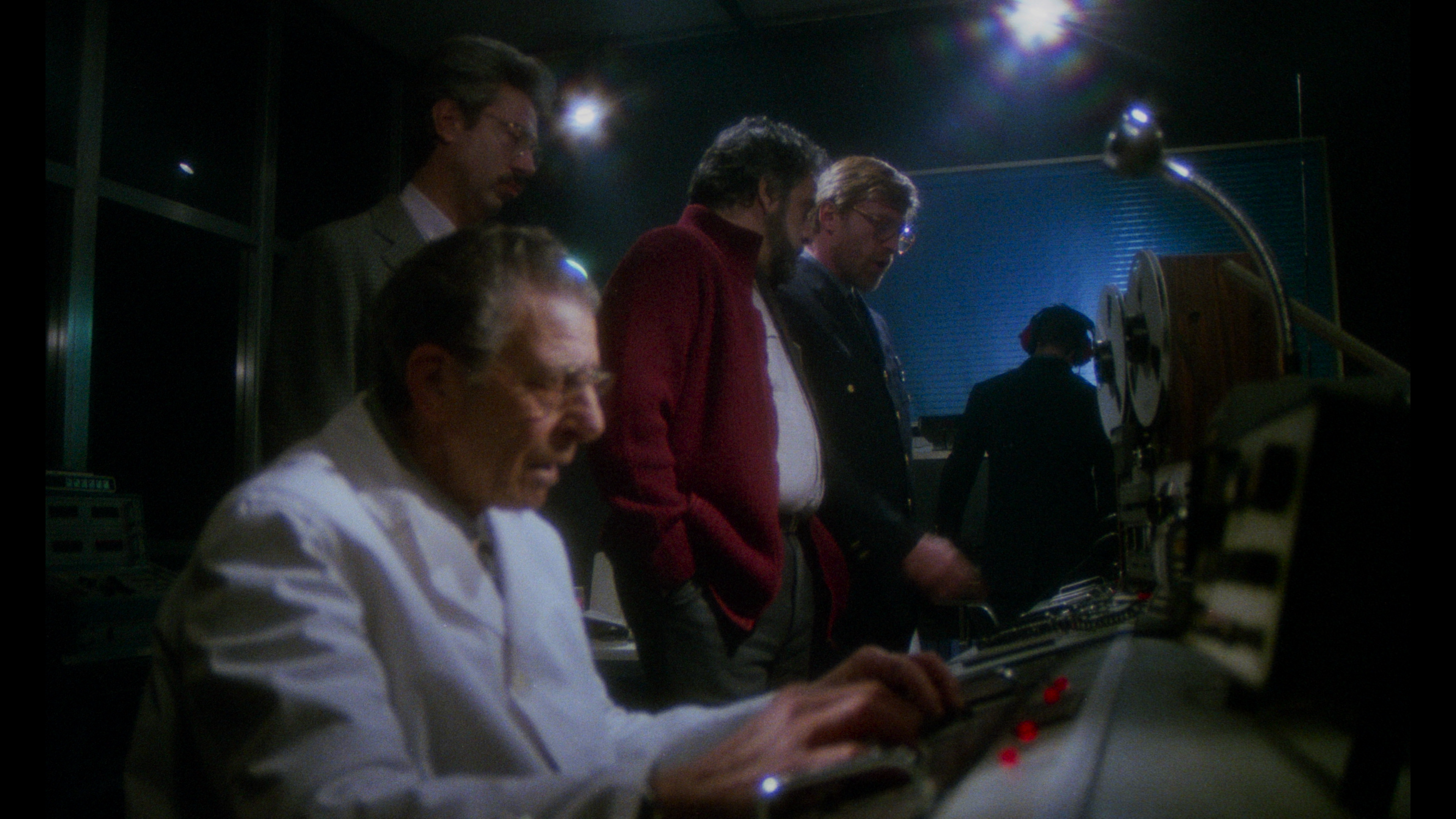


Written by Michael Den Boer

Sunday, April 20, 2025

Bohachi Bushido: Code of the Forgotten Eight: Limited Red Case Edition – Mondo Macabro (4k UHD/Blu-ray Combo)

Theatrical Release Date: Japan, 1973
Director: Teruo Ishii
Writers: San Kaji, Kazuo Koike, Goseki Kojima
Cast: Tetsurô Tanba, Gorô Ibuki, Tatsuo Endô, Ryôhei Uchida, Yuriko Hishimi, Keiko Aikawa, Rena Ichinose, Shôki Fukae

Release Date: March, 2025
Approximate Running Time: 81 Minutes 12 Seconds
Aspect Ratio: 2.35:1 Widescreen / 2160 Progressive / HEVC / H.265 / HDR10
Rating: NR
Sound: DTS-HD Mono Japanese
Subtitles: English
Region Coding: Region Free (4K UHD), Region A (Blu-ray)
Retail Price: $42.00

"The legendary actor Tetsuro Tanba stars as Shiro, a master swordsman who is weary of the world of samurai honor and samurai killing, and so attempts suicide rather than finishing a fight. He is saved by the Bohachi clan, a gang of pimps who have forsaken all honor and whose cynicism outruns even his own. But ultimately, he even tires of their nihilistic worldview, leading to a final showdown in the snow ...." - synopsis provided by the distributor

Video: 4.5/5 (4K UHD), 4/5 (Blu-ray)

Here’s the information provided about the transfer, "Brand new 4K restoration from the original negative."

Bohachi Bushido: Code of the Forgotten Eight comes on a 66 GB dual layer 4K UHD

Disc Size: 53.4 GB

Feature: 43 GB

The source looks excellent; that said, there are a few instances that are not as strong; one example of this can be seen in screenshot #12. Flesh tones look healthy, colors look great, black levels are strong, image clarity and compression are solid, and there are no issues with digital noise reduction.

Bohachi Bushido: Code of the Forgotten Eight comes on a 50 GB dual layer Blu-ray.

Disc Size: 32.6 GB

Feature: 22.3 GB

This Blu-ray uses the same master that is used for the 4K UHD disc.

Audio: 5/5

This release comes with one audio option, a DTS-HD mono mix in Japanese with removable English subtitles. The audio sounds excellent; dialog comes through clearly, everything sounds balanced, and ambient sounds are well-represented.

Extras:

Extras on the 4K UHD disc include a theatrical trailer (3 minutes 11 seconds, Dolby Digital mono Japanese with removable English subtitles), an archival introduction with Pinky Violence expert J-Taro Sugisaku, Cult movie director Takao Nakano and Yoshiki Hayashi (42 seconds, Dolby Digital stereo Japanese with removable English subtitles), an archival interview with Yoshiki Hayashi titled What is Pinky Violence? (15 minutes 33 seconds, Dolby Digital stereo Japanese with removable English subtitles), an archival interview with actress Yuriko Hishimi (21 minutes 5 seconds, Dolby Digital stereo Japanese with removable English subtitles), an interview with Shinya Tsukamoto about Bohachi Bushido: Code of the Forgotten Eight and the career of Teruo Ishii (17 minutes 44 seconds, Dolby Digital stereo Japanese with removable English subtitles), an archival audio commentary with J-Taro Sugisaku, Takao Nakano and Yoshiki Hayashi, and an audio commentary with Japanese film expert and author Tom Mes.

The extras are the same on both discs.

Other extras include a slipcover, and a 24-page booklet with an essay titled Bohachi Bushido: Code of the Forgotten Eight written by Mark Schilling.

Summary:

Teruo Ishii directed Bohachi Bushido: Code of the Forgotten Eight. His other notable films include Shogun’s Joys of Torture, Inferno of Torture, Orgies of Edo, Horrors of Malformed Men, The Blind Woman’s Curse, and The Executioner. Bohachi Bushido: Clan of the Forgotten Eight was adapted from a manga written by Kazuo Koike, who also created these series: Hanzo the Razor, Lady Snowblood, and Lone Wolf & Cub.

Shiro is a wanted assassin who is tired of being chased by the law and sees suicide as his only way out. His attempt at suicide is foiled when he is rescued and brought back to health by members of a clan known as the Bohachi. Shiro agrees to help the Bohachi dispose of their enemies; in return, they will provide him sanctuary from the law. Can Shiro trust the Bohachi to uphold their end of the bargain, or will they cut him loose after he serves his purpose?

Bohachi Bushido: Code of the Forgotten Eight stylish openings do a phenomenal job drawing you in. The protagonist, while crossing a bridge, finds himself surrounded by four assassins who are soon joined by additional men. Although he manages to dispose of many of them, he realizes the odds are insurmountable and decides to jump off the bridge into the river below. The carnage in this sequence, like those that follow, are geysers of blood and severed limbs. There is a surreal quality to this sequence that continues throughout.

“To die is hell, but to live, is also hell” are words spoken by the protagonist throughout. He is a man with no regard for life; he is willing to sacrifice his own at any moment. The narrative revolves around his dealings with a clan known as Bohachi, who have removed servitude, loyalty, trust, propriety, justice, conscience, shame, and religion from their code of honor. The Bohachi subjugate women, forcing them into submissive sexual slavery and risking their lives to serve their masters. The remaining characters consist of rival clans and corrupt government officials.

All around, the cast are excellent, especially Tetsuro Tamba (Zero Woman: Red Handcuffs) in the role of Shiro. Another performance of note is Yuriko Hishimi, who portrays Oman, one of the Bohachi women who are assigned to help protect Shiro while he kills all their enemies. The Bohachi women's loyalty is perfectly encapsulated in a scene where Shiro is surrounded by a ring of fire. They roll around until the fire is put out, then they remove their clothes and continue to fight in the nude.

Visually, Teruo Ishii has a knack for creating some of the most fantastically perverse set pieces that are equally brutal and laced with sex. There is plenty of nudity, including sword and hand-to-hand fighting by the female cast. Don’t let their beauty fool you; they are equally, if not more, dangerous than their male counterparts. In the most memorable scene the protagonist is drugged, and an orgy of carnage erupts when his enemies try to take advantage of the situation. Though all of the flight sequences are exemplary; the best is saved for the finale. Ultimately, Bohachi Bushido: Clan of the Forgotten Eight is one of the most remarkable and unforgettable films to emerge from Toei’s Pinky Violence cinema cycle.

Bohachi Bushido: Code of the Forgotten Eight gets an excellent release from Mondo Macabro that comes with a solid audio/video presentation and a wealth of insightful extras, highly recommended.

Note: This edition is limited to 2000 copies.

Note about the 4K screenshots: It is not possible to make Dolby Vision or HDR10 screenshots that faithfully match the experience of watching a film in motion on a TV. Instead of not having any screenshots, all of the 4K screenshots are m2ts taken with a MPC-HC player and lossless PNGs.


Written by Michael Den Boer

Saturday, April 19, 2025

Yumeno Kyusaku’s Girl Hell – 88 Films (Blu-ray/DVD Combo)

Theatrical Release Date: Japan, 1977
Director: Masaru Konuma
Writer: Akio Ido
Cast: Asami Ogawa, Yûko Asuka, Eimei Esumi, Moeko Ezawa, Tamaki Katsura, Ichirô Kijima, Masakazu Kuwayama, Noboru Mitani, Rei Okamoto

Release Date: March 24th, 2025
Approximate Running Time: 92 Minutes 37 Seconds
Aspect Ratio: 2.35:1 Widescreen / 1080 Progressive / MPEG-4 AVC
Rating: 18 (UK)
Sound: LPCM Mono Japanese
Subtitles: English
Region Coding: Region B
Retail Price: £16.99 (UK)

"Passions are inflamed in an elite school for girls in 1930s Japan in Yumeno Kyusaku’s Girl Hell, as two of its students find solace away from the crowd in each other’s company. But can their love flourish amongst the corrupting influence of their parents and the school’s sinister principal, whose actions transform their lives into a living hell on earth?" - synopsis provided by the distributor

Video: 5/5

Here’s the information provided about this release's transfer, "Blu-Ray (1080P) Presentation in 2.35:1 Aspect Ratio."

Yumeno Kyusaku’s Girl Hell comes on a 50 GB dual layer Blu-ray.

Disc Size: 33.5 GB

Feature: 25.5 GB

The source looks excellent; flesh tones look healthy, colors are nicely saturated, black levels are strong, and image clarity and compression are solid.

Audio: 4.5/5

This release comes with one audio option, a LPCM mono mix in Japanese with removable English subtitles. The audio sounds clean, clear, and balanced, and range-wise ambient sounds are well represented.

Extras:

Extras for this release include a stills gallery with music from the film playing in the background, a theatrical trailer (3 minutes 24 seconds, Dolby Digital mono Japanese with removable English subtitles), an interview with Kei Chiba titled Planet Girl (8 minutes 48 seconds, Dolby Digital stereo Japanese with removable English subtitles), an interview with Ken Terawaki titled Life on Mars (14 minutes 21 seconds, Dolby Digital stereo Japanese with removable English subtitles), an audio Commentary with Anne McKnight and Jasper Sharp, removable OBI strip leaving packaging free of certificates and markings and a 12-page booklet with cast & crew information, and an essay titled Girls from Mars written by Caitlin Casiello.

Included is a DVD that has the same content as the Blu-ray.

Summary:

Masaru Konuma directed Yumeno Kyusaku’s Girl Hell. He is also known for Flower and Snake '74, Wife to Be Sacrificed, Cloistered Nun: Runa's Confession, Erotic Diary of an Office Lady, and Tattooed Flower Vase. Yumeno Kyusaku’s Girl Hell was adapted from Yumeno Kyusaku’s (Dogra Marga) novel Shoujo Jigoku (Girl Hell).

When their parents and a deviant principal stand in the way of their love, two girls who attend an all-girl religious school create hell on Earth.

Though Nikkatsu romantic pornography films are known for their sexual content, these films were actually diverse and covered a wide range of film genres. Case in point, Yumeno Kyusaku’s Girl Hell, a horror-themed film with fantasy elements. That said, Yumeno Kyusaku’s Girl Hell incorporates many elements characteristic of Nikkatsu’s romantic pornography films, such as nudity, deviant behavior, and sexually themed moments; as a result, it unfolds more like a conventional film than the typical offerings of this genre.

Masaru Konuma was one of the most prominent filmmakers making Nikkatsu romantic pornography films, and with Yumeno Kyusaku’s Girl Hell, he ventures away from his more familiar S&M-themed films. His direction is rock solid; Yumeno Kyusaku’s Girl Hell is a beautifully photographed film filled with visually arresting moments. The visuals are enhanced by an exemplary score that perfectly underscores the eerie tone of Yumeno Kyusaku’s Girl Hell.

When it comes to the performances, the cast are excellent in their roles, especially Asami Ogawa (Erotic Diary of an Office Lady), who portrays Utae, and Yûko Asuka (Star of David: Beautiful Girl Hunter), who portrays Aiko. Their characters are outcasts who struggle to fit in, finding solace only in each other's company as they escape the harshness of reality. Another performance of note is Masakazu Kuwayama (A Story Written with Water), who portrays a rapist principal.

At 93 minutes in length, Yumeno Kyusaku’s Girl Hell runs significantly longer than the typical 70-minute duration that Nikkatsu romantic pornography films usually clock in at. Though there is more of a focus on exposition, that's not to say that Yumeno Kyusaku’s Girl Hell is lacking when it comes to elements that Nikkatsu romantic pornography films are known for. When it comes to pacing the narrative, it does a superb job building to a surreal ending that serves as a perfect coda. Ultimately, Yumeno Kyusaku’s Girl Hell is a film that delves deeper than most Nikkatsu romantic pornography films, which are only concerned about what's on the surface.

Yumeno Kyusaku’s Girl Hell gets an exceptional release from 88 Films that comes with a solid audio/video presentation and insightful extras; highly recommended.


Written by Michael Den Boer

Friday, April 18, 2025

Assault! Jack the Ripper – 88 Films (Blu-ray/DVD Combo)

Theatrical Release Date: Japan, 1976
Director: Yasuharu Hasebe
Writers: Yasuharu Hasebe, Chiho Katsura
Cast: Tamaki Katsura, Yuri Yamashina, Natsuko Yashiro, Yutaka Hayashi, Midori Mori

Release Date: March 24th, 2025
Approximate Running Time: 72 Minutes 1 Second
Aspect Ratio: 2.35:1 Widescreen / 1080 Progressive / MPEG-4 AVC
Rating: 18 (UK)
Sound: LPCM Mono Japanese
Subtitles: English
Region Coding: Region B
Retail Price: £16.99 (UK)

"Ken (Yutaka Hayashi), a serious young man working as a cake decorator at an upmarket coffeeshop, finds himself led seriously astray by his feisty waitress coworker Yuri (the unforgettable Tamaki Katsura) after a chance encounter with a disturbed young woman (Yuri Yamashina) fuels their passion for murder and they embark on a vicious killing spree." - synopsis provided by the distributor

Video: 5/5

Here’s the information provided about this release's transfer, "Blu-Ray (1080P) Presentation in 2.35:1 Aspect Ratio."

Assault! Jack the Ripper comes on a 25 GB single layer Blu-ray.

Disc Size: 24.2 GB

Feature: 19.8 GB

The source looks excellent; flesh tones look healthy, colors are nicely saturated, black levels are strong, and image clarity and compression are solid.

Audio: 4.5/5

This release comes with one audio option, a LPCM mono mix in Japanese with removable English subtitles. The audio sounds clean, clear, and balanced, and range-wise ambient sounds are well represented.

Extras:

Extras for this release include a stills gallery with music from the film playing in the background (stills/poster), a theatrical trailer (2 minutes 1 second, Dolby Digital mono Japanese with removable English subtitles), an interview with Kei Chiba titled Body & Blood (11 minutes 41 seconds, Dolby Digital stereo Japanese with removable English subtitles), an audio commentary with Amber T. and Jasper Sharp, removable OBI strip leaving packaging free of certificates and markings and a 12-page booklet with cast & crew information, and an essay titled Finding Power in Sex and Blood Assault! Jack the Ripper & Yasuharu Hasebe’s Sustaining Relevance in Artistic Expression written by Tori Potenza.

Included is a DVD that has the same content as the Blu-ray.

Summary:

Yasuharu Hasebe was one of the prominent directors working in Nikkatsu romantic pornography films. His first two forays into this genre, The Naked Seven and Sukeban Deka: Dirty Mary, were both homages: Seven Samurai and Dirty Harry, respectively. He found his first success in this genre with Okasu!, a film that started the Violent Pink sub-genre. Other notable films he directed in this sub-genre include Assault! Jack the Ripper, Attack! 13th Hour, Attacked! And Yaru!.

A young man is unable to get aroused or please his woman without violently murdering women.

Assault! Jack the Ripper is Yasuharu Hasebe's most disturbing film. It is one of Nikkatsu’s most violent romantic pornography films. Assault! Jack the Ripper, like Yasuharu Hasebe's other romantic pornography films, falls into a subgenre known as violent pink. These films focus more on moments of carnage than eroticism. When it comes to Assault! Jack the Ripper’s murder set pieces, it is clear how the Giallo genre may have influenced them.

The film’s title is Assault! However, referring to it as Jack the Ripper is somewhat misleading, as the killings primarily occur in pairs, and it is not until later that the male lover ventures out on his own to commit murder. Though the killer has an accomplice, her role is mostly passive. That said, both of them become aroused by the sight of carnage.

Outside of the two leads, Yutaka Hayashi (Bullet Train), who portrays Ken aka Jack the Ripper, and Tamaki Katsura (Sins of Sister Lucia), who portrays Yuri, the rest of the cast are given little to work with and are mere props. Though Ken has a sadistic side, he is more a man of action than words, while Yuri likes to cause conflict. Both of them deliver flawless performances that are utterly terrifying and convincing.

Assault! Jack the Ripper relies heavily on its brutal and bloody murder set pieces, where women are carved up before being finished off with a knife to their private parts. The violence inflicted upon women is unflinching, and it escalates as the narrative progresses, culminating in an orgy of violence. Visually, Yasuharu Hasebe does not disappoint when it comes to carnage and mayhem.

From a production standpoint, Assault! Jack the Ripper is a film that far exceeds the sum of its parts. The narrative does a superb job introducing Ken and Yuri, and it is relentlessly paced once the killing starts. Another strength is Hajime Kaburagi's (Stray Cat Rock: Sex Hunter) score, which perfectly underscores the mood. Ultimately, Assault! Jack the Ripper is an orgy of bloodlust and carnage, making it a must-see for fans of violent pink cinema.

Assault! Jack the Ripper gets an exceptional release from 88 Films that comes with a solid audio/video presentation and a trio of insightful extras, highly recommended.


Written by Michael Den Boer

Thursday, April 17, 2025

A Tale of Sorrow and Sadness: Limited Edition – Radiance Films (Blu-ray)

Theatrical Release Date: Japan, 1977
Director: Seijun Suzuki
Writer: Gan Yamazaki
Cast: Kyôko Enami, Yoshio Harada, Masumi Okada, Shûji Sano, Yoko Shiraki, Jô Shishido

Release Date: April 28th, 2025 (UK), April 29th, 2025 (USA)
Approximate Running Time: 93 Minutes 5 Seconds
Aspect Ratio: 2.35:1 Widescreen / 1080 Progressive / MPEG-4 AVC
Rating: 15 (UK), NR (USA)
Sound: LPCM Mono Japanese
Subtitles: English
Region Coding: Region A,B
Retail Price: £14.99 (UK), $39.95 (USA)

"The editor of a sports magazine grooms fashion model Reiko (Yoko Shiraki) to become a pro golfer, while retaining exclusive rights to her likeness. Reiko’s popularity soars after she wins her first tournament and she becomes a media sensation, but when she and her manager (Yoshio Harada, Zigeunerweisen) cause a hit-and-run accident, the victim begins to blackmail Reiko, intruding further and further into her personal life." - synopsis provided by the distributor

Video: 4.5/5

Here’s the information provided about the transfer, "A Tale of Sorrow and Sadness was transferred in High-Definition by the Shochiku Corporation. The film was supplied to Radiance Films as a High-Definition digital file and is presented in the original aspect ratio."

A Tale of Sorrow and Sadness comes on a 50 GB dual layer Blu-ray.

Disc Size: 33.1 GB

Feature: 27 GB

The source looks excellent; flesh tones look correct, colors are nicely saturated, image clarity and compression are solid, contrast and black levels are strong throughout, and there are no issues with digital noise reduction.

Audio: 4.5/5

This release comes with one audio option, a LPCM mono mix in Japanese with removable English subtitles. The audio is in great shape. Dialog comes through clearly, and everything sounds balanced and robust when it should. That said, when compared to Cinema Epoch’s 2009 DVD release, this new transfer is a substantial upgrade, and it is like seeing A Tale of Sorrow and Sadness for the first time.

Extras:

Extras for this release include a theatrical trailer (2 minutes 25 seconds, LPCM mono Japanese with removable English subtitles), an interview with editor Kunihiko Ukai (19 minutes 54 seconds, LPCm stereo Japanese with removable English subtitles), an audio commentary with film critic and author Samm Deighan, reversible cover art, removable OBI strip leaving packaging free of certificates and markings and a 32-page booklet (limited to 3000 copies) cast & crew information, an essay titled Sorrow, Sadness and the Sweet Smell of Excess written by Jasper Sharp, an archival review titled The Realisation of a Seijun Suzuki film written by AAtsushi Yamatoya, and information about the transfer.

Summary:

After directing an incredible forty films over a twelve-year span (1956–1967) for Nikkatsu, director Seijun Suzuki would be unceremoniously fired by Nikkatsu’s president, Hori Kyusaku. He would declare that "Suzuki’s films were incomprehensible, that they did not make any money, and Suzuki might as well give up his career as a director as he would not be making films for any other companies."

Following his exile from Nikkatsu, Seijun Suzuki would retreat to television, directing three projects: Good Evening, Dear Husband: A Duel (1968), There’s a Bird Inside a Man (1969), and A Mummy’s Love (1970), while he awaited the verdict in his court case against Nikkatsu, who terminated his contract after Branded to Kill (1967).

Though Seijun Suzuki would win his case of defamation against Nikkatsu, his career would come to a halt after being blacklisted by all the major studios in Japan. There would be a ten-year gap between Branded to Kill, the last film that he directed for Nikkatsu, and his return to the big screen with 1977’s A Tale of Sorrow and Sadness.

Seijun Suzuki is primarily known for directing flamboyant films about dysfunctional characters who quickly find themselves in over their heads as they try to escape the demons from their past. Seijun Suzuki’s take on the sports and entertainment worlds in A Tale of Sorrow and Sadness is reminiscent of the way that he approached the Yakuza, prostitutes, and samurai that are prominent in the films that he directed for Nikkatsu.

It is fascinating how Seijun Suzuki is able to transform the themes explored in A Tale of Sorrow and Sadness by drawing similarities from the plot and its characters that show that they are not that different from the Yakuza, prostitutes, and samurai that populate his other films. Beneath every surface are layers of reality, and Seijun Suzuki, just like the characters in his films, never reveals their true intentions until this moment of truth arrives in A Tale of Sorrow and Sadness.

The heroine of A Tale of Sorrow and Sadness Reiko is an insecure model. It is her need for acceptance that leads to her manipulation by a character named Mr. Miyake, whose ultimate goal is to make her a dominant golfer. Reiko eventually falls for Mr. Miyake, who is cold and brazen toward her.

Reiko is a determined woman whose desire to please Mr. Miyake leaves her broken and exhausted. She practices at one point so much that her hands start bleeding. During her tournament debut, she faints before her last shot. And lying on the ground, she looks over at Mr. Miyake, who motions for her to get back up. Wanting to please Mr. Miyake, she gets up and sinks the shot, only to collapse again.

The first act of A Tale of Sorrow and Sadness focuses on her training; the middle of the film shifts the focus to her rise as a star; and the last act details her downward spiral.

The femme fatale of A Tale of Sorrow and Sadness is an obsessed fan named Senboh, who, through blackmail, works her way into Reiko’s life. The most disturbing moment and the event that signals Senboh's state of mind is a scene where she cuts up an autograph that she received from Reiko "Ginzu style". Senboh engulfs herself in her new-found power by forcing Reiko to cut her hair in a grotesque fashion. Once again, unable to think for herself, Reiko lets her stalker manipulate her life until chaos reigns supreme. Eventually, Senboh finally reaches her own breaking point when she invites several hanger-ons to Reiko’s house for a party. Reiko is literally eaten alive by the very masses that made her famous. With everyone at the party disregarding Reiko’s boundaries as they mock her and rummage through her belongings.

After this impromptu party reaches its conclusion, it becomes painfully obvious to Senboh that she’s been used and tossed aside. The other key person in Reiko’s life is her younger brother Jun, whom she takes care of. Junis is overly protective of his older sister, and he becomes increasingly jealous the more attention that is paid to her, with whom he once shared an inseparable bond.

Visually, A Tale of Sorrow and Sadness demonstrates that Seijun Suzuki, despite his prolonged break from filmmaking, has not lost a step. With the scene that leaps out as classic Seijun Suzuki being a hit-and-run sequence that uses slow motion to emphasize that tragic event.

During the chaos, Reiko tries to leap from the moving car. She's then reined back in by Mr. Miyake, who stops the car at the edge of a cliff. This scene symbolically shows that they finally went too far and that there are consequences for their actions. The most satisfying moment visually is a montage sequence that shows several closeups of Reiko at the various stages of her evolution.

Yoshio Harada is cast in the role of Mr. Miyake. He had a long and varied career, and some of his notable films include Stray Cat Rock: Wild Measures ’71, Lady Snowblood 2: Love Song of Vengeance, Shogun’s Samurai, Hunter in the Dark, Onini: The Fire Within, Party 7, and 9 Souls. After working with Seijun Suzuki for the first time on A Tale of Sorrow and Sadness, they would collaborate on four more films: The Fang in the Hole, Zigeunerweisen, Kageroza, and Yumeji.

A Tale of Sorrow and Sadness' most remarkable performance is Kyôko Enami's in the role of Senboh, Reiko’s stalker. Other notable films that she has appeared in include The Wolves, The Fall of Ako Castle, and the Gambling Woman series. Cast in this film’s lead role, Reiko, is an actress named Yoko Shiraki, and A Tale of Sorrow and Sadness appears to be her only film. And one of Seijun Suzuki’s frequent collaborators from Nikkatsu, Joe Shinodo, has a brief cameo as a cop. Ultimately, A Tale of Sorrow and Sadness is a decadent tale about obsession and the pitfalls of fame.

A Tale of Sorrow and Sadness gets an excellent release from Radiance Films that comes with a solid audio/video presentation and a trio of informative extras; highly recommended.


Written by Michael Den Boer

The Big Combo: Special Edition – Ignite Films (4k UHD/Blu-ray Combo) Theatrical Release Dates: USA, 1955 (The Big Combo), USA, 1949 (The Cro...